
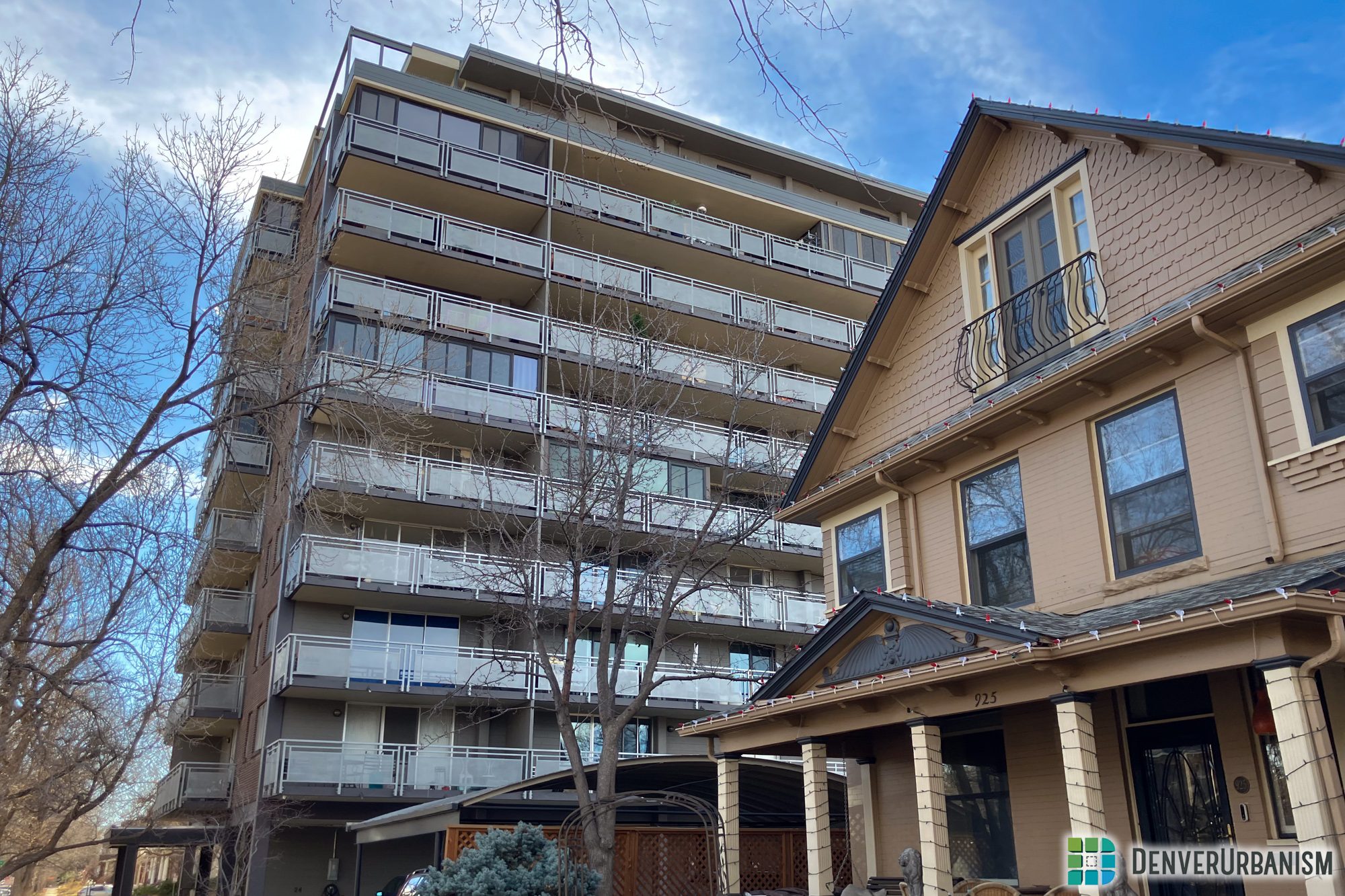
What is Denver’s densest neighborhood, with a mix of building sizes and types? Where can you still find reasonably cheap studios and one-bedroom apartments? When your friend’s suburban dad complains about parking, what’s his go-to example of the toughest place in Denver to park? What neighborhood approaches a feeling of big-city living, where you and your neighbors are likely to bike to the grocery store, walk your kid to school, take the bus to work, and hardly ever touch the car?
We’re talking about Denver’s Capitol Hill. For the purpose of this blog post, let’s just hand-wave official borders and combine Capitol Hill proper with some other neighborhoods, characterizing the area between 20th Avenue, Speer Boulevard, Lincoln Street, and Josephine Street as “Greater Capitol Hill.” Though smaller than Capitol Hill United Neighbor’s expansive definition, this 2.5 square mile section of Central Denver is home to about 40,000 people—more than the population of Englewood with only 40% of Englewood’s land area—meaning that 5.5% of Denver’s population lives on only 1.6% of the city’s land. According to a recent analysis of Denver’s census tracts, almost all of the census tracts in this Greater Capitol Hill area rank among the city’s top quartile for population density and low-car living. Almost all of this area’s residents have access to transit, living within walking distance of restaurants, retail, even Downtown or Cherry Creek. This is good! This is urbanism!
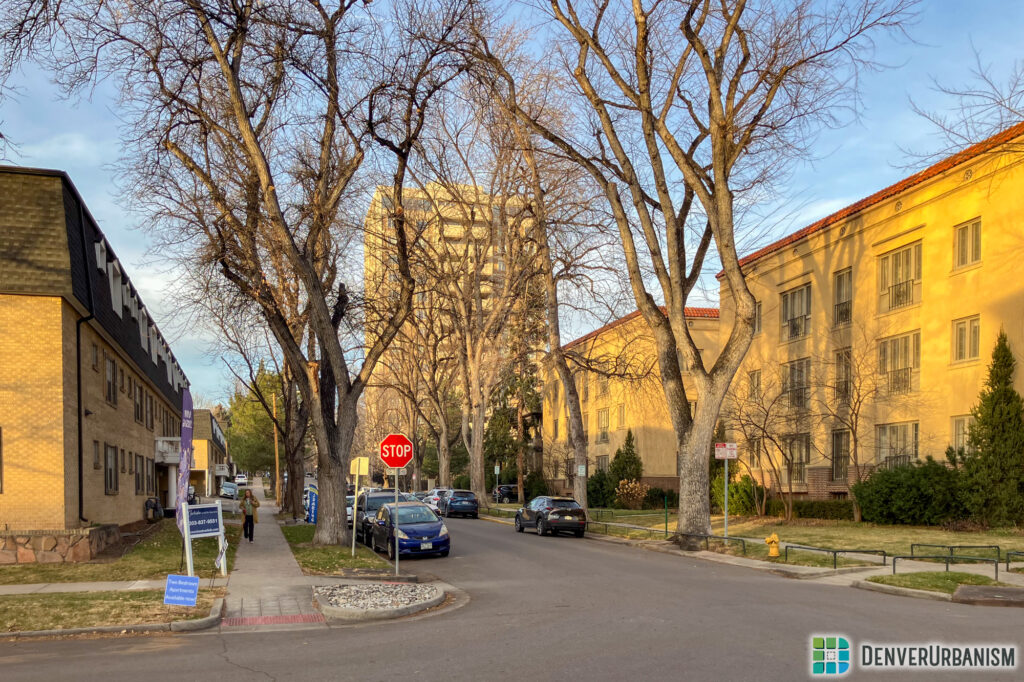
But it’s exactly this kind of dense, walkable urbanism that turns out to be illegal to build nowadays. Take for instance the buildings at the intersection of 10th Avenue and Logan Street: the zoning for this corner of the neighborhood is G-MU-5, where a multi-unit apartment building of up to 5 stories is allowed. Uh-oh. Counting up the windows of Executive House catches the offender red-handed: 9 stories tall, the same infraction as Story Apartments across the street with ample balconies as proof. Just up Logan Street is the Denver House apartments at 17 stories tall, also in a G-MU-5 zone. At 10th Avenue and Grant Street, the development entitlement increases significantly—you can build up to 8 stories. Tough news though for the lawbreaking Colburn Hotel and The Burnsley at 1000 Grant Street, at 10 and 15 stories respectively. And I’m not even ratting out a uniquely offensive corner of the neighborhood. There exists a seven-story condominium at 1255 Ogden Street that’s zoned to allow 5 stories maximum, were it built today. The William Tell Apartments, pictured below, a 10-story, income-restricted senior living facility at 16th Avenue and Williams Street, sticks out in its G-RO-3 zone.
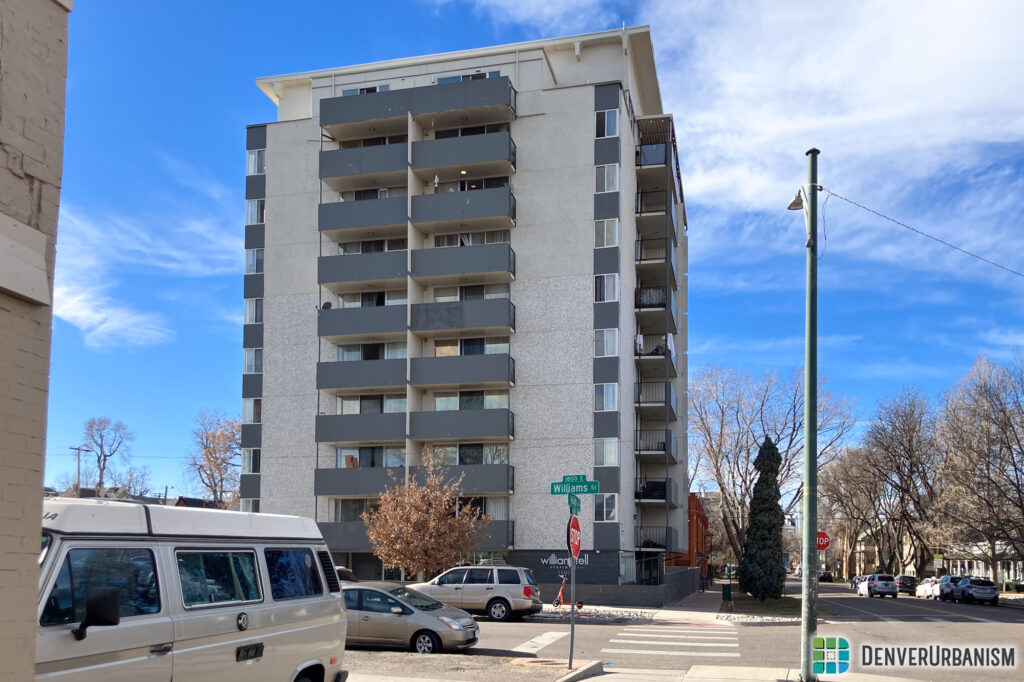
The Park Regency Condos at 9th and Lafayette are likewise 10 stories tall, 7 stories more than is allowed in a G-MU-3 zone district.
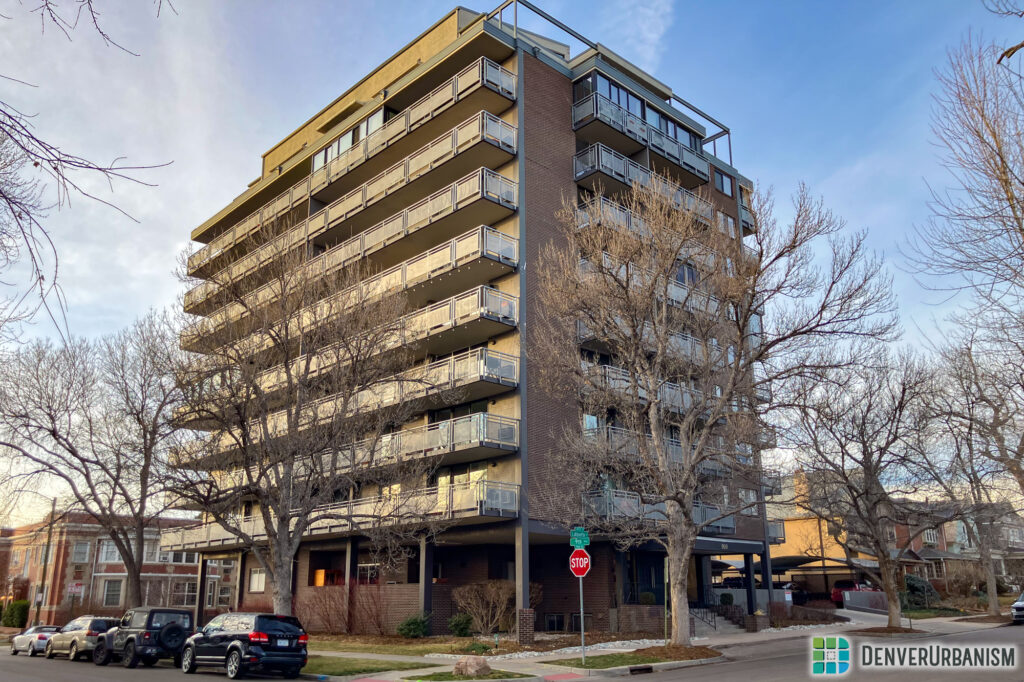
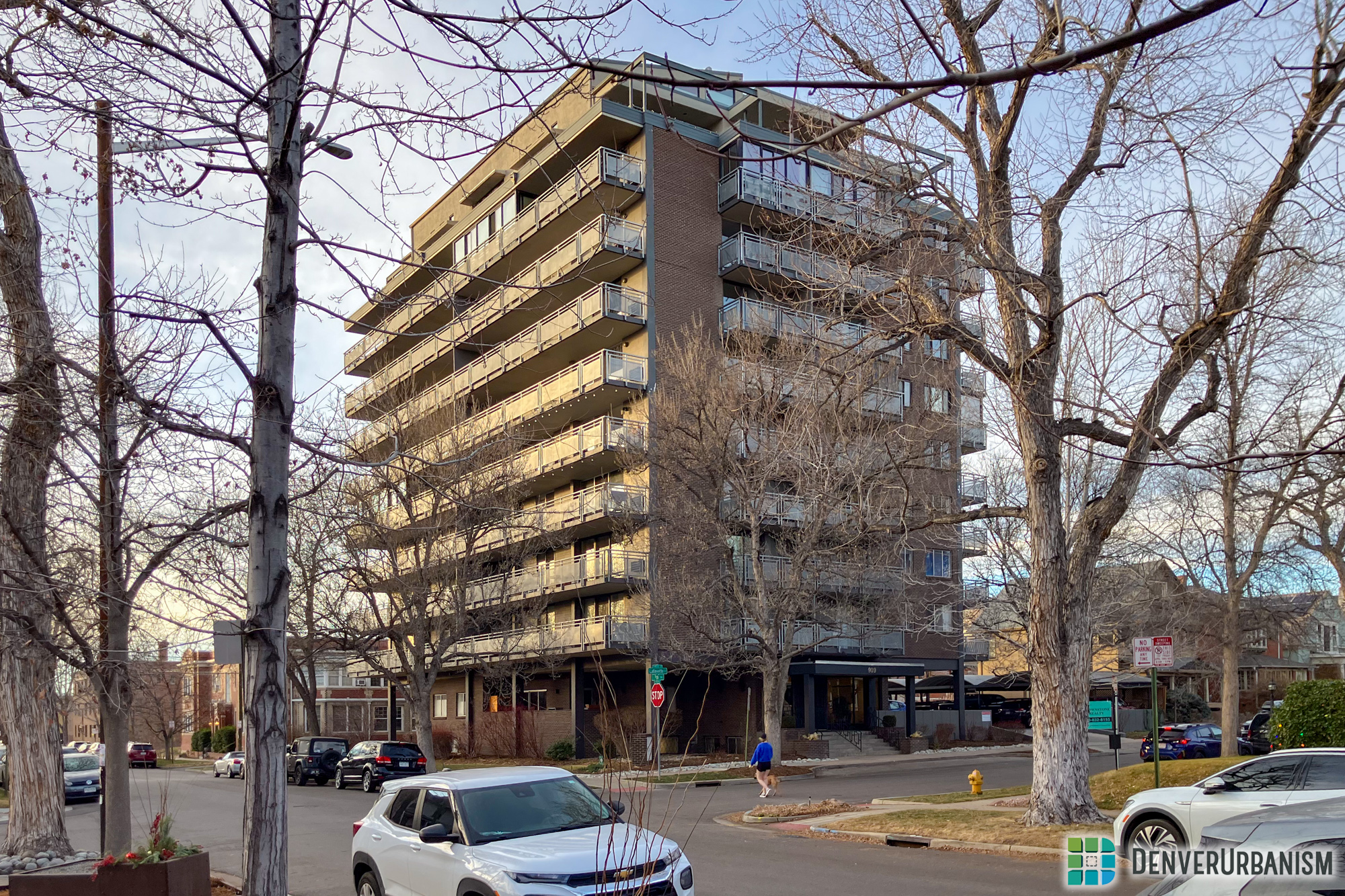
With the same G-MU-3 zoning, on either side of High Street at 14th Avenue, an 8-story and 10-story apartment building stand, their mugshots already captured by Google Streetview, just waiting for zoning inspectors to crack down.
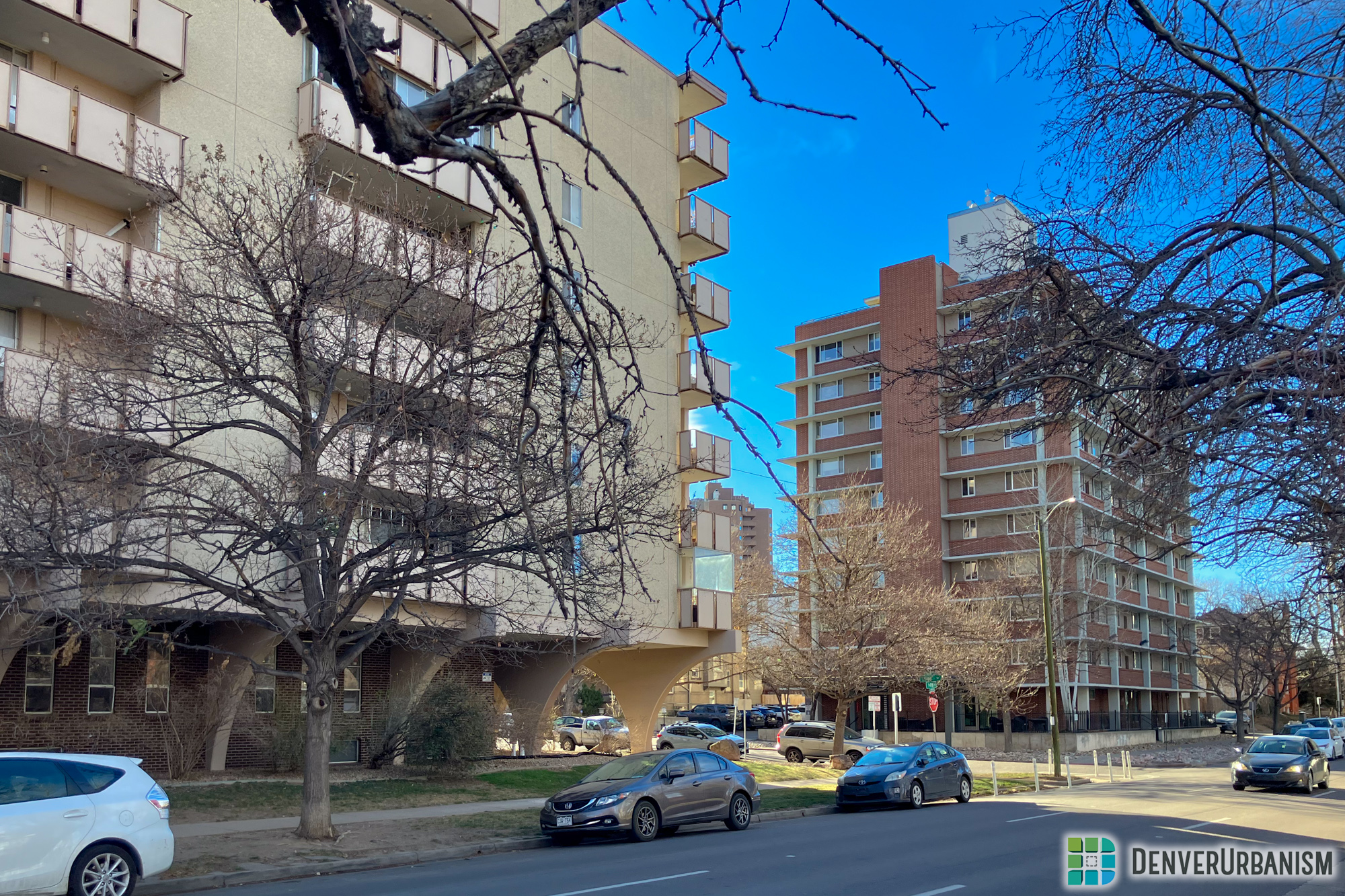
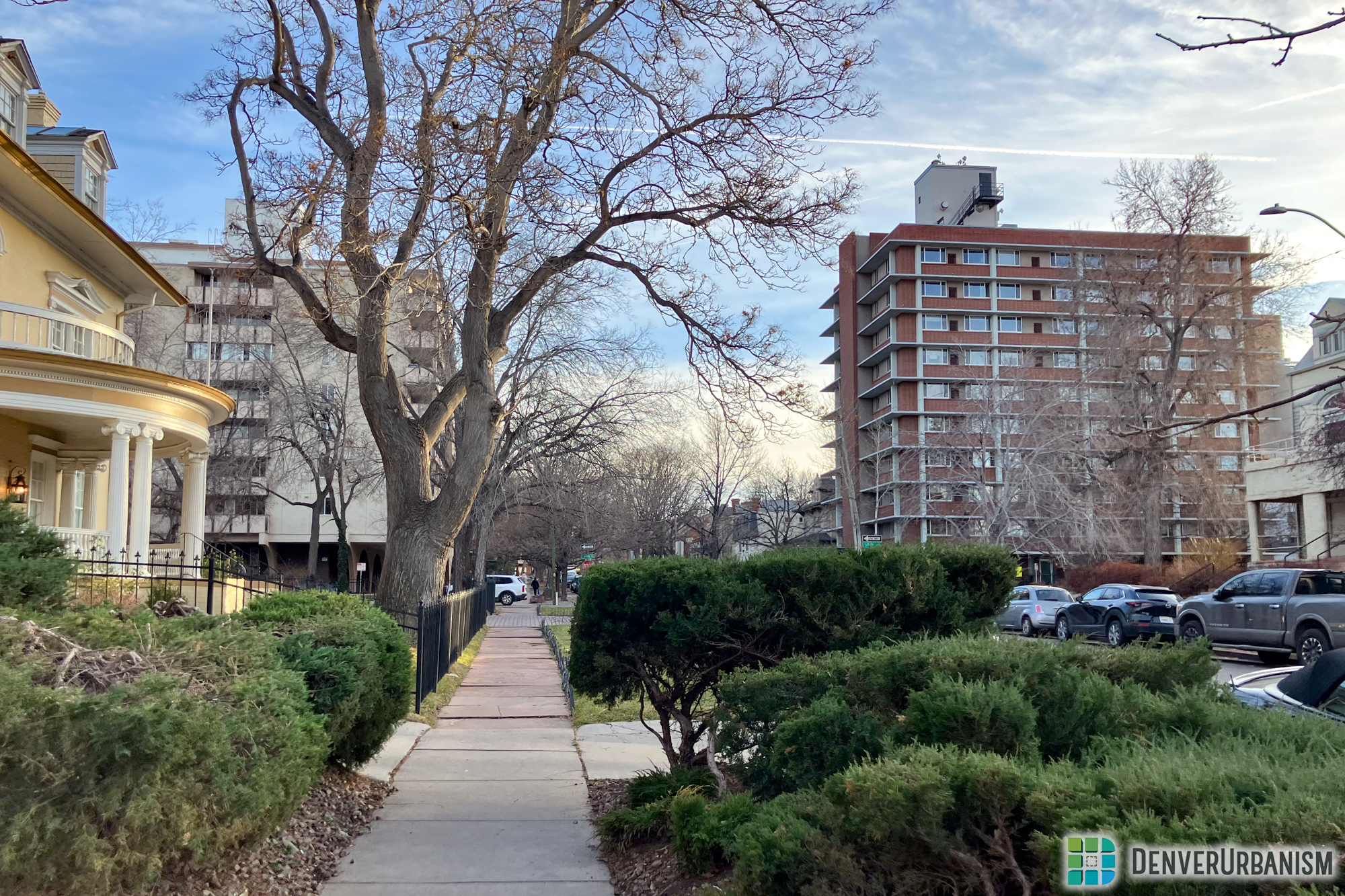
Even where a building nominally falls into an acceptable height, as is the case with the 3-story Shenandoah Apartments at 1010 Emerson Street, the G-RH-3 zoning on this parcel doesn’t allow the apartment building form. Whoops. The same is true at The King George Apartments on Franklin Street; though 3-story apartments are allowed in the U-RH-3A zone district, they’re only allowed at an intersection, not in the middle of the block. Those infractions might have been easy to overlook, so let me name an easier mark. At 515 Clarkson Apartments—a 12-story building only four blocks from a grocery store—you would, at maximum density, be allowed to develop this site as rowhomes at 2 and a half stories tall if the site redeveloped today. And just the other day as I was out for a long walk with my dogs, I noticed several duplexes down along Gilpin Street, and at 5th Avenue I came upon a lovely cottage court at the corner, totally keeping within the scale of the neighborhood, but in a building form you rarely see in Denver. Cute, a bit of architectural history, unfortunately illegal to build today under the U-SU-A zoning that applies to the parcels.
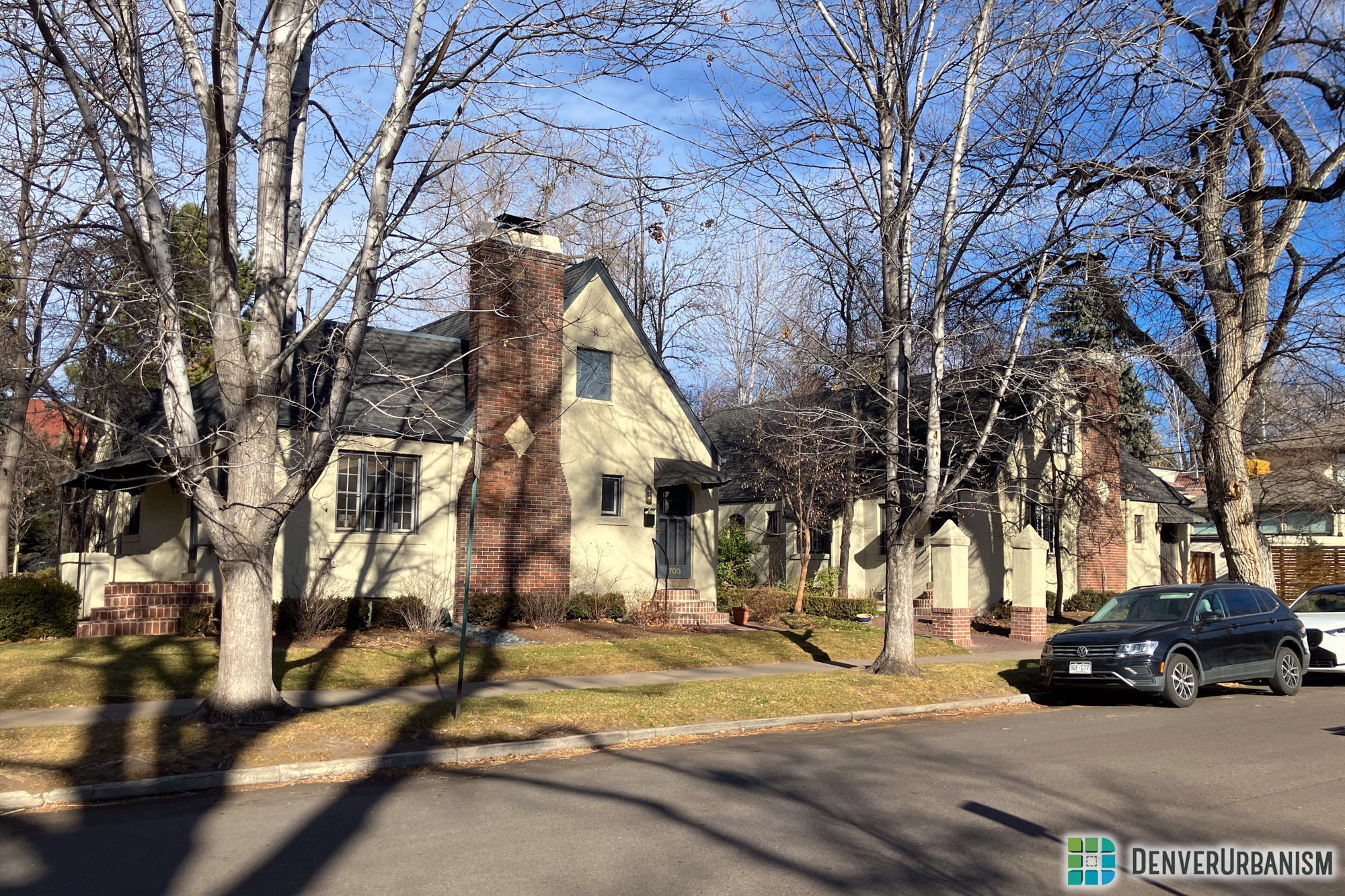
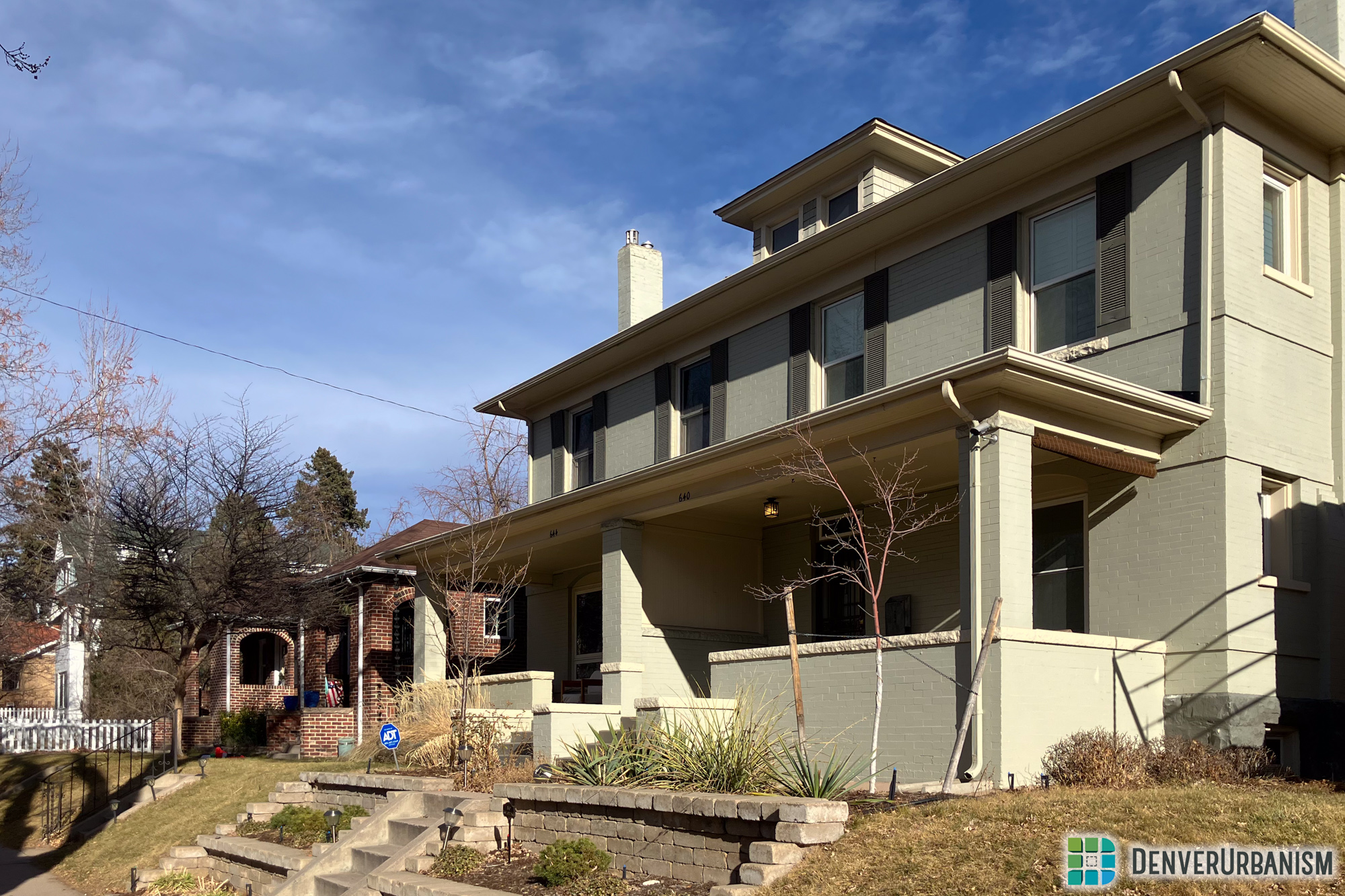
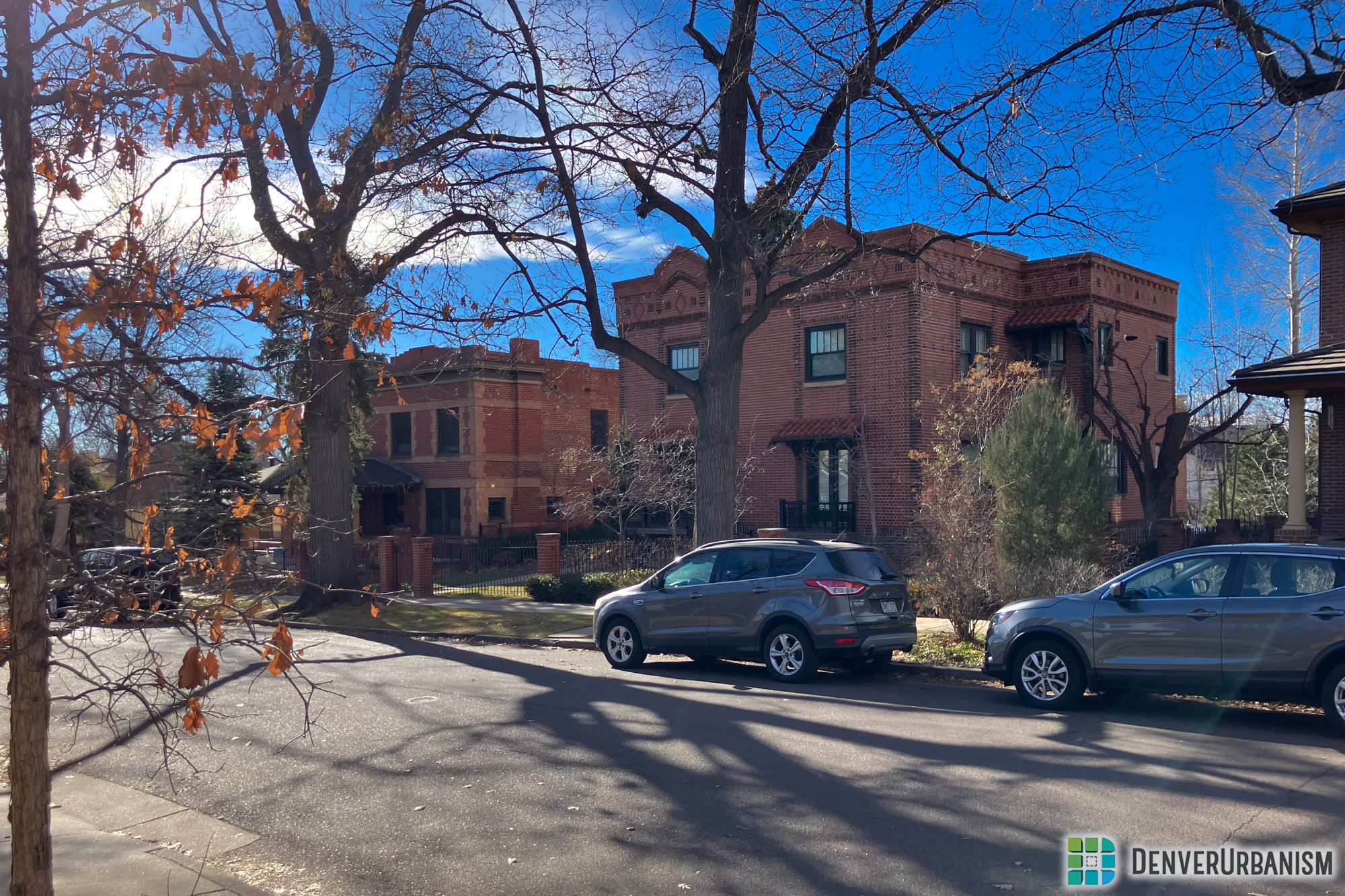
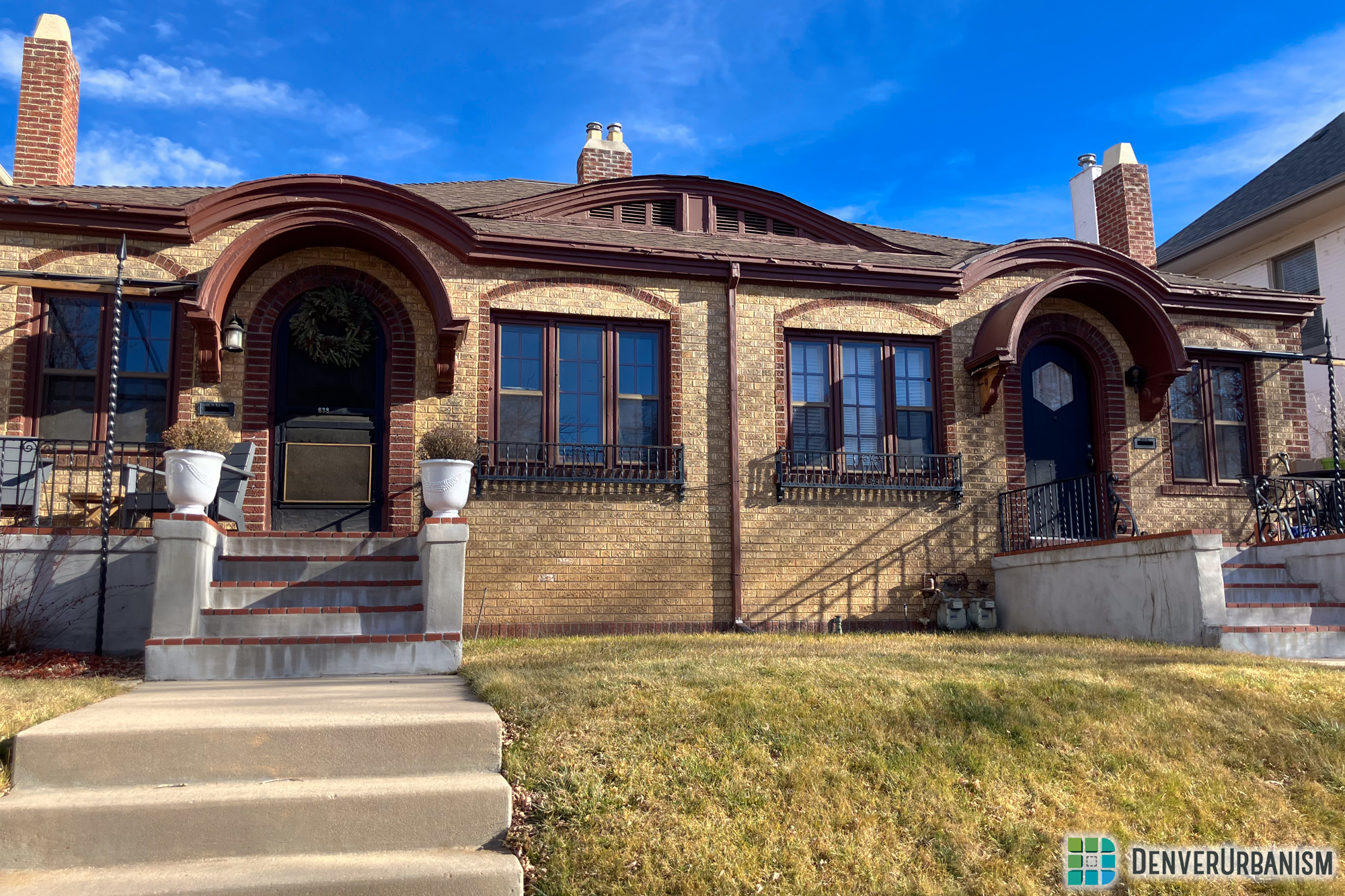
The more you look, big or small, the more it seems almost all of Greater Capitol Hill’s mid- to high-rise apartments and condominiums would be illegal to build under Denver’s current zoning framework for the neighborhood.
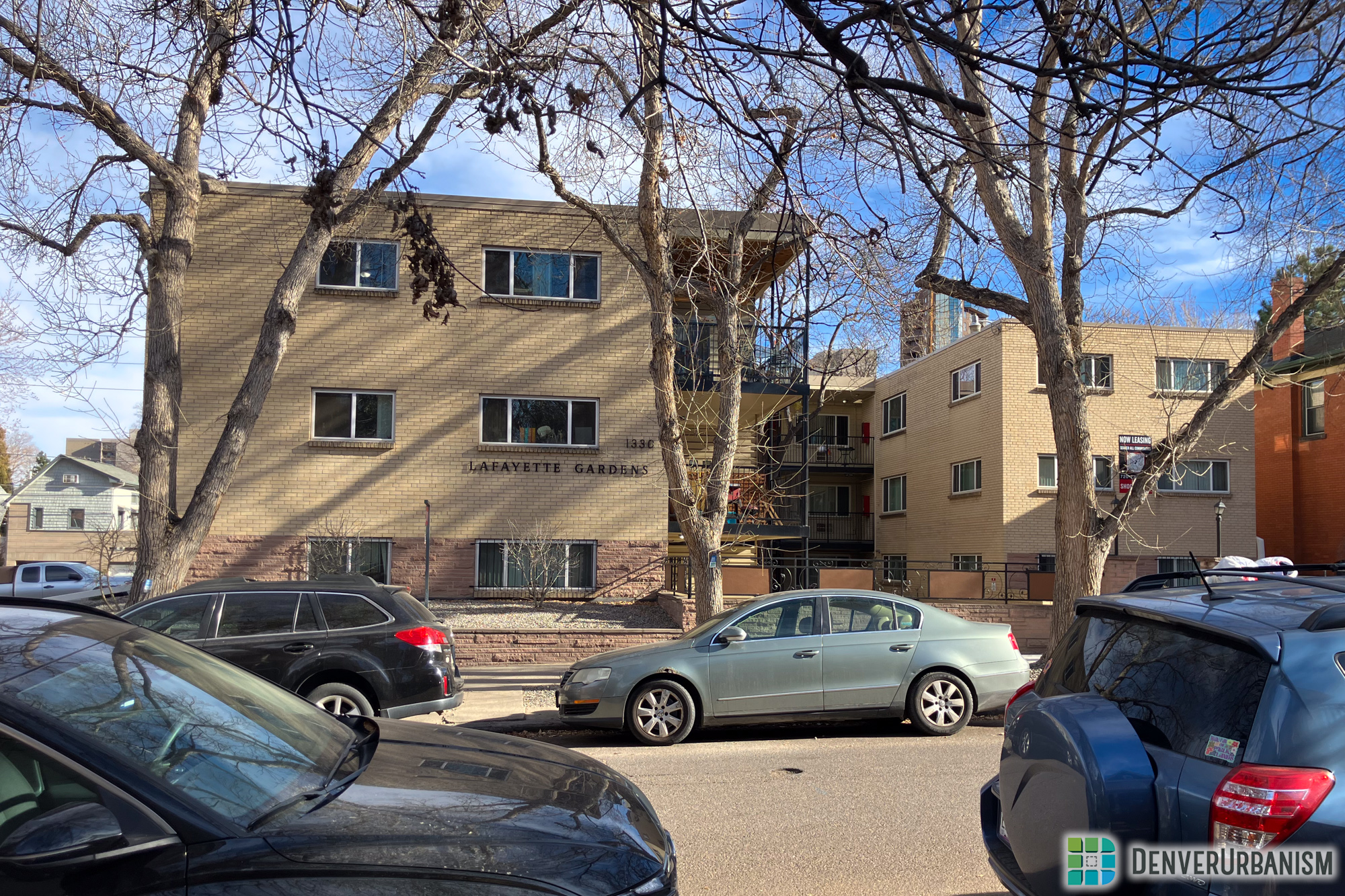
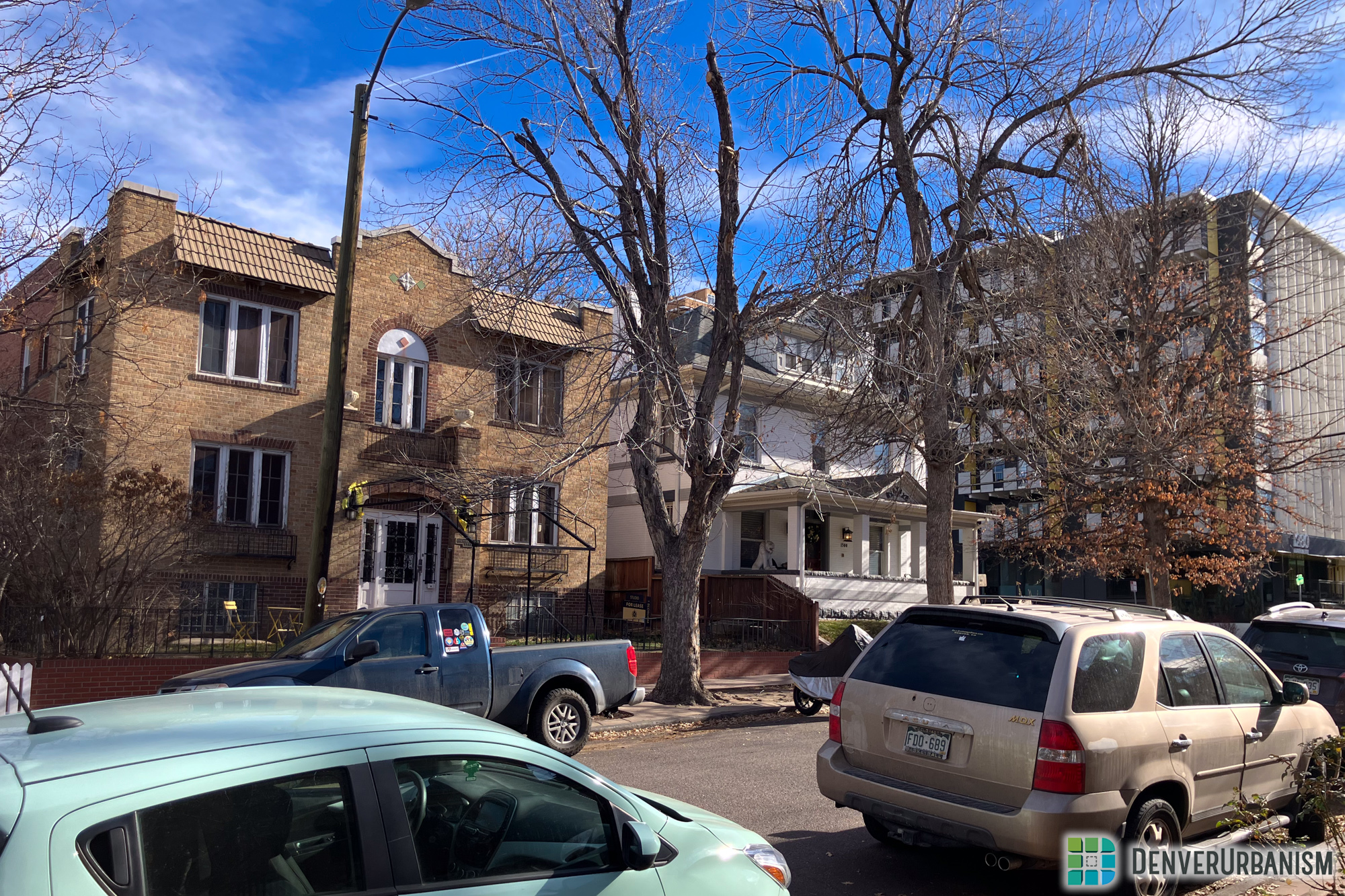
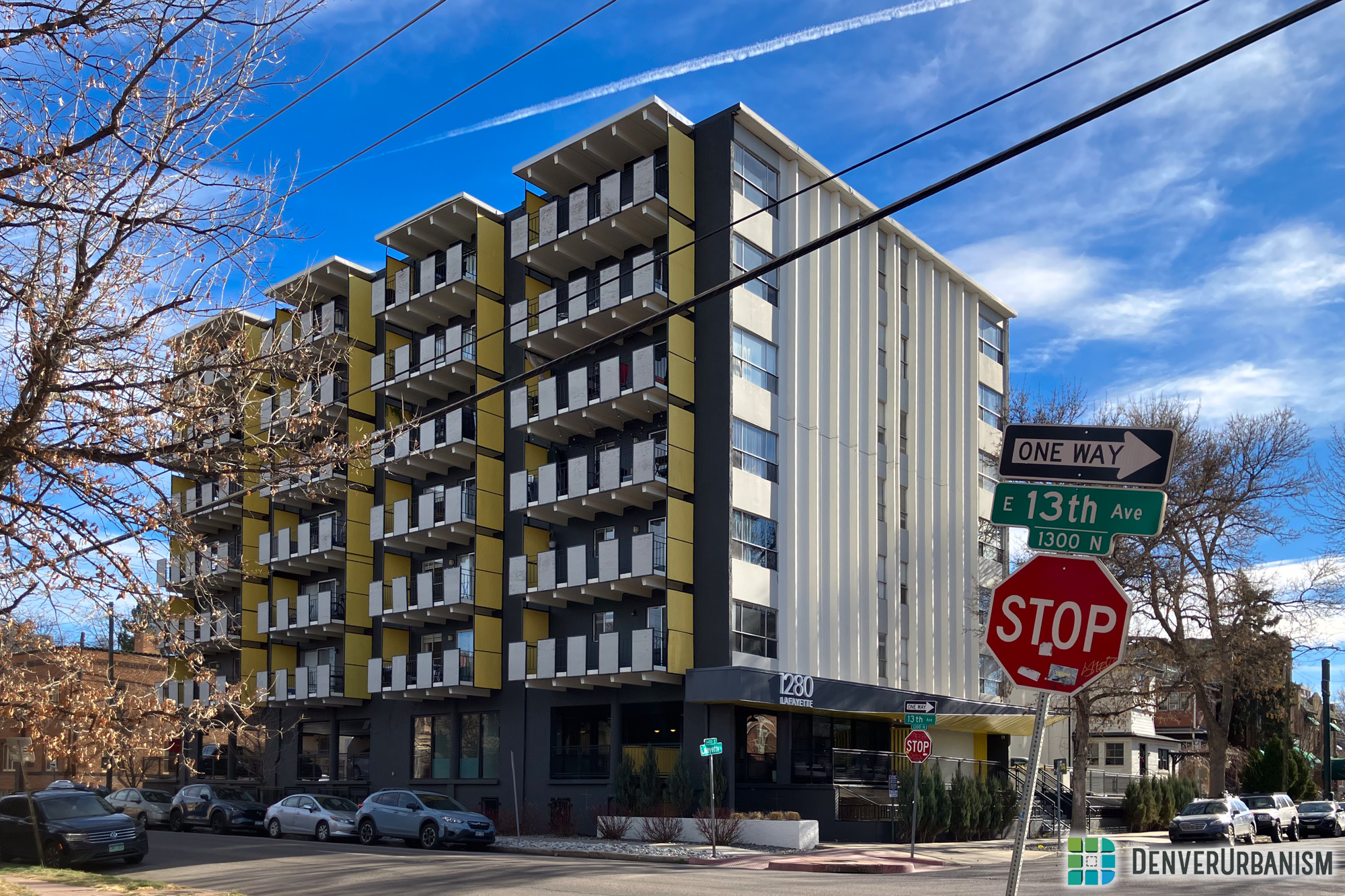
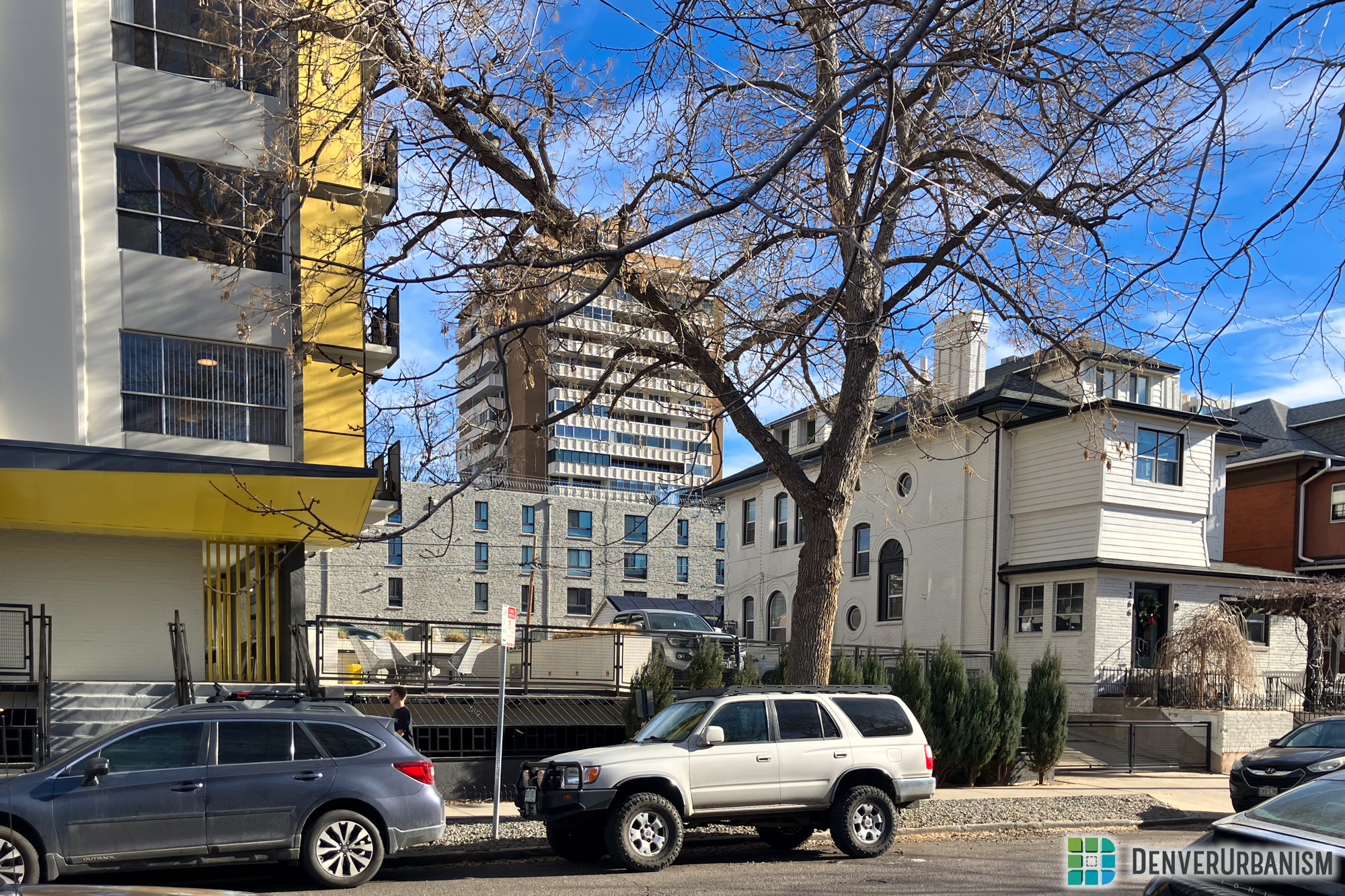
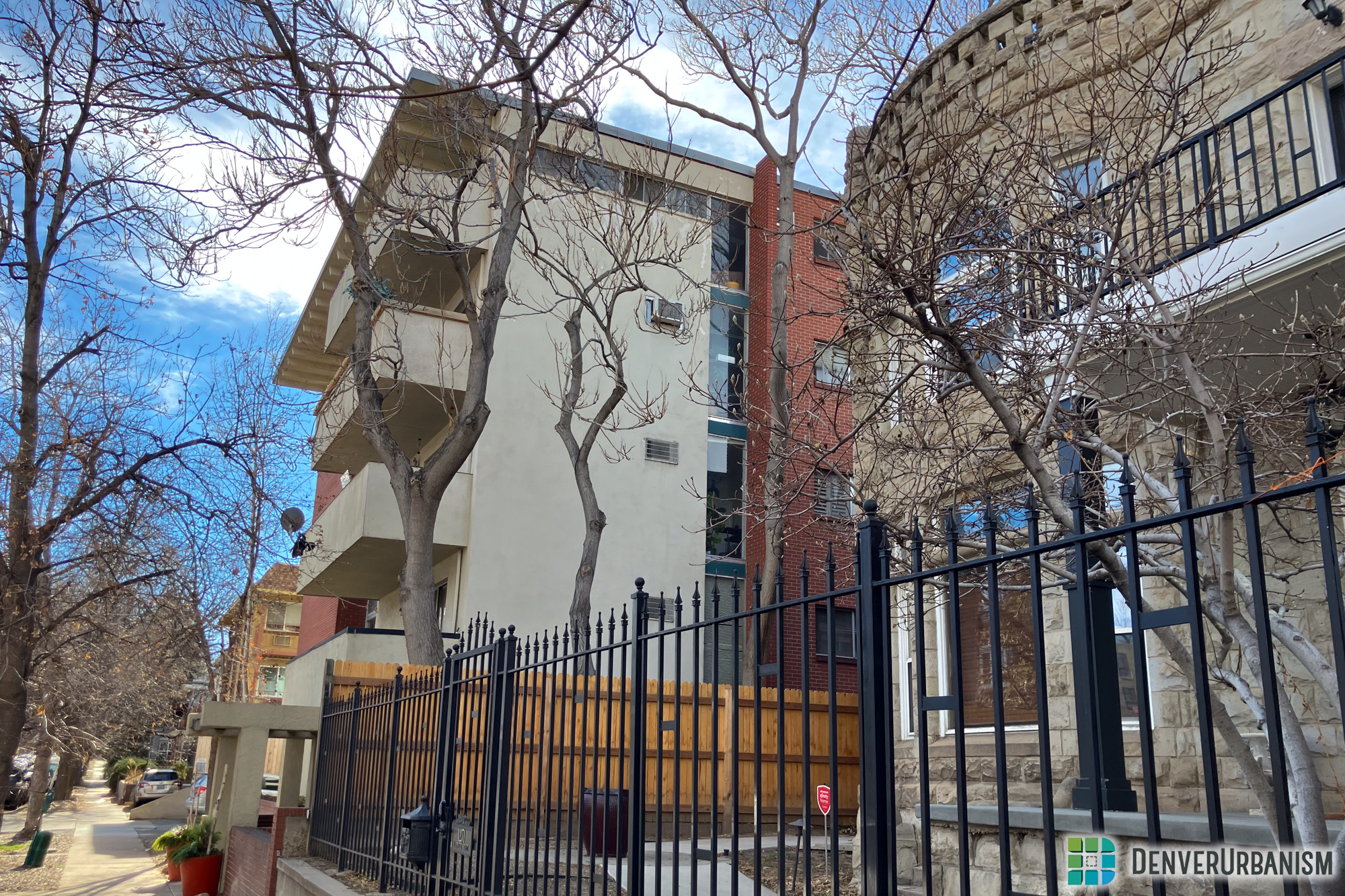
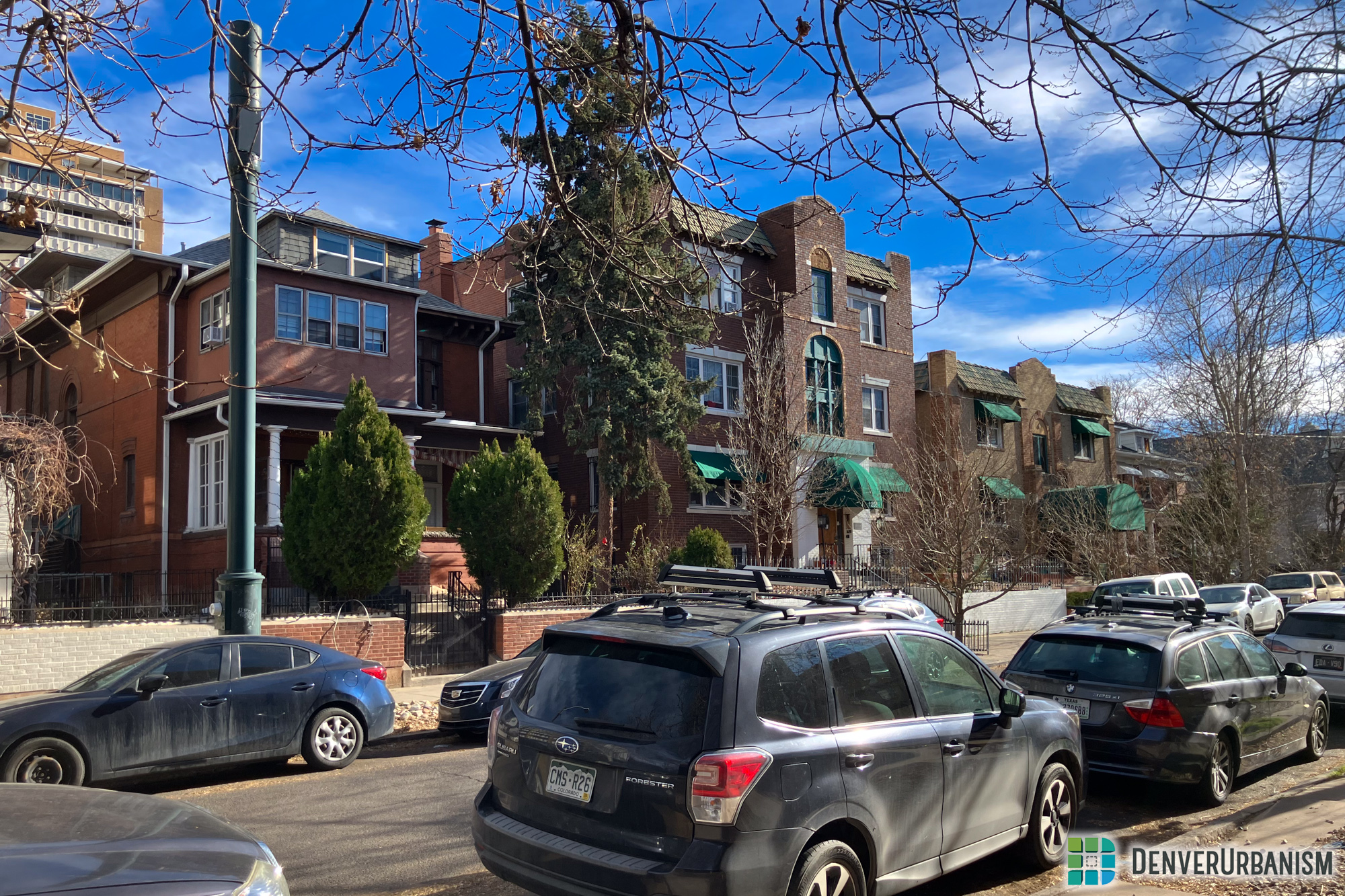
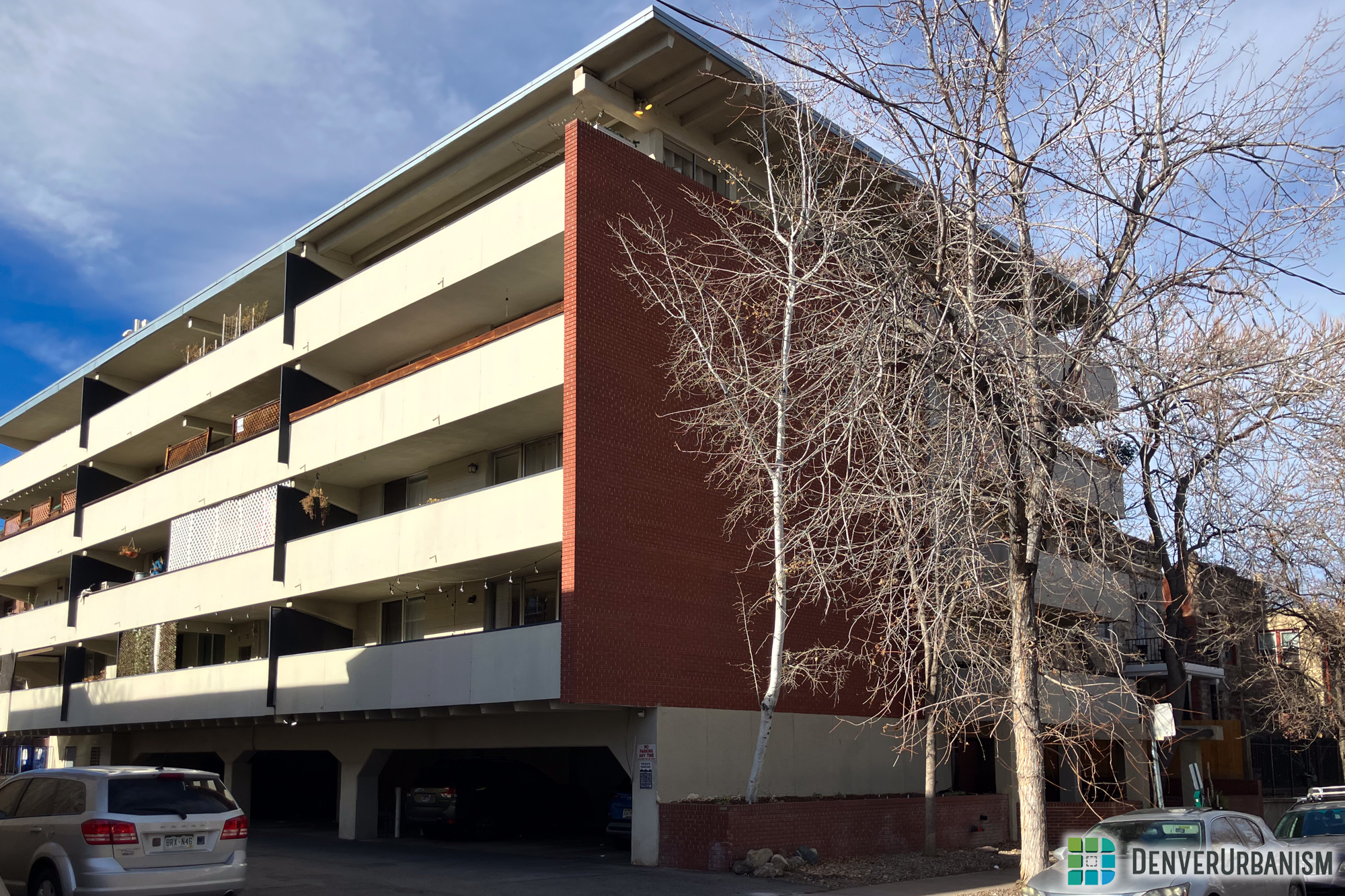
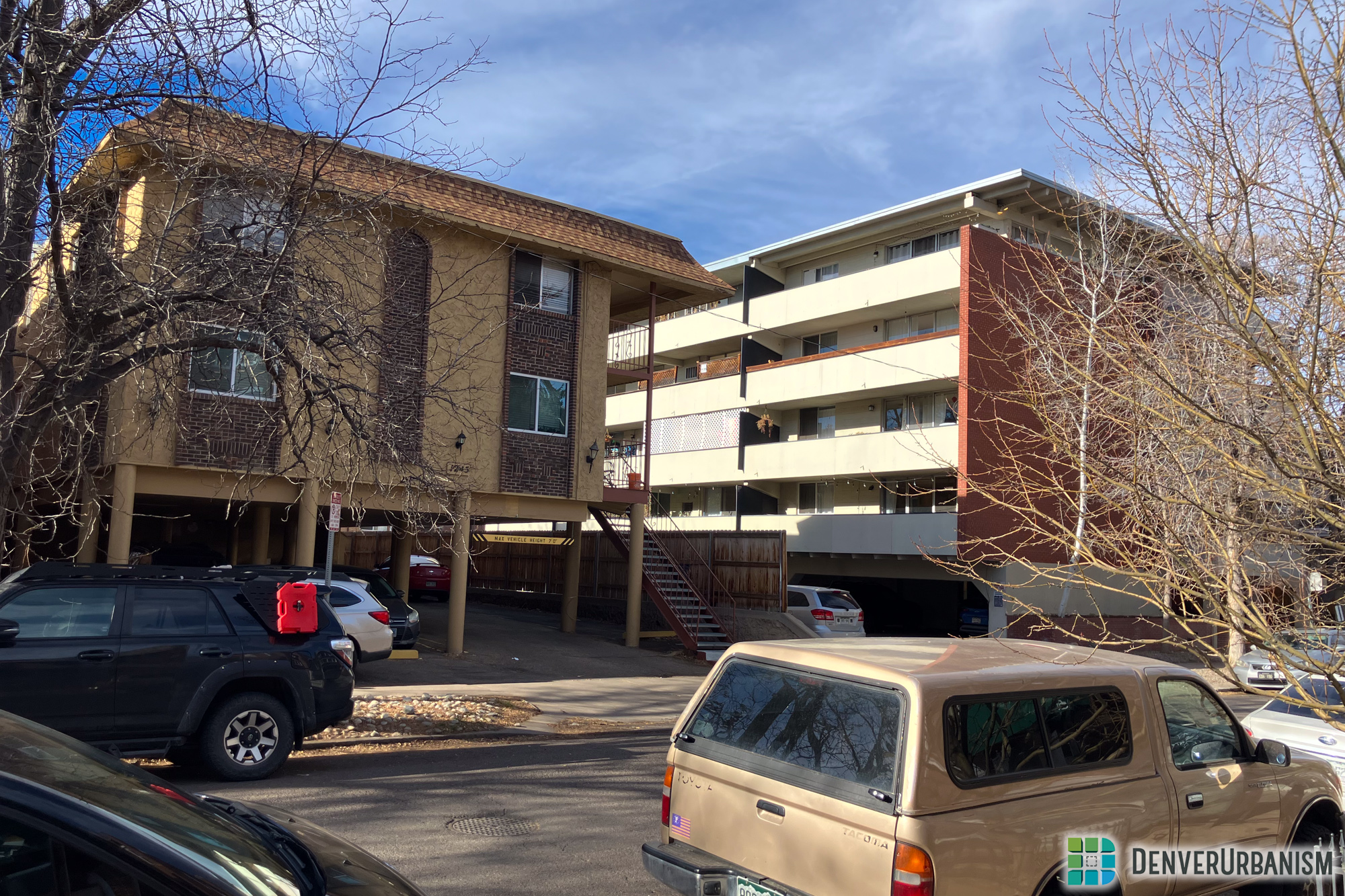
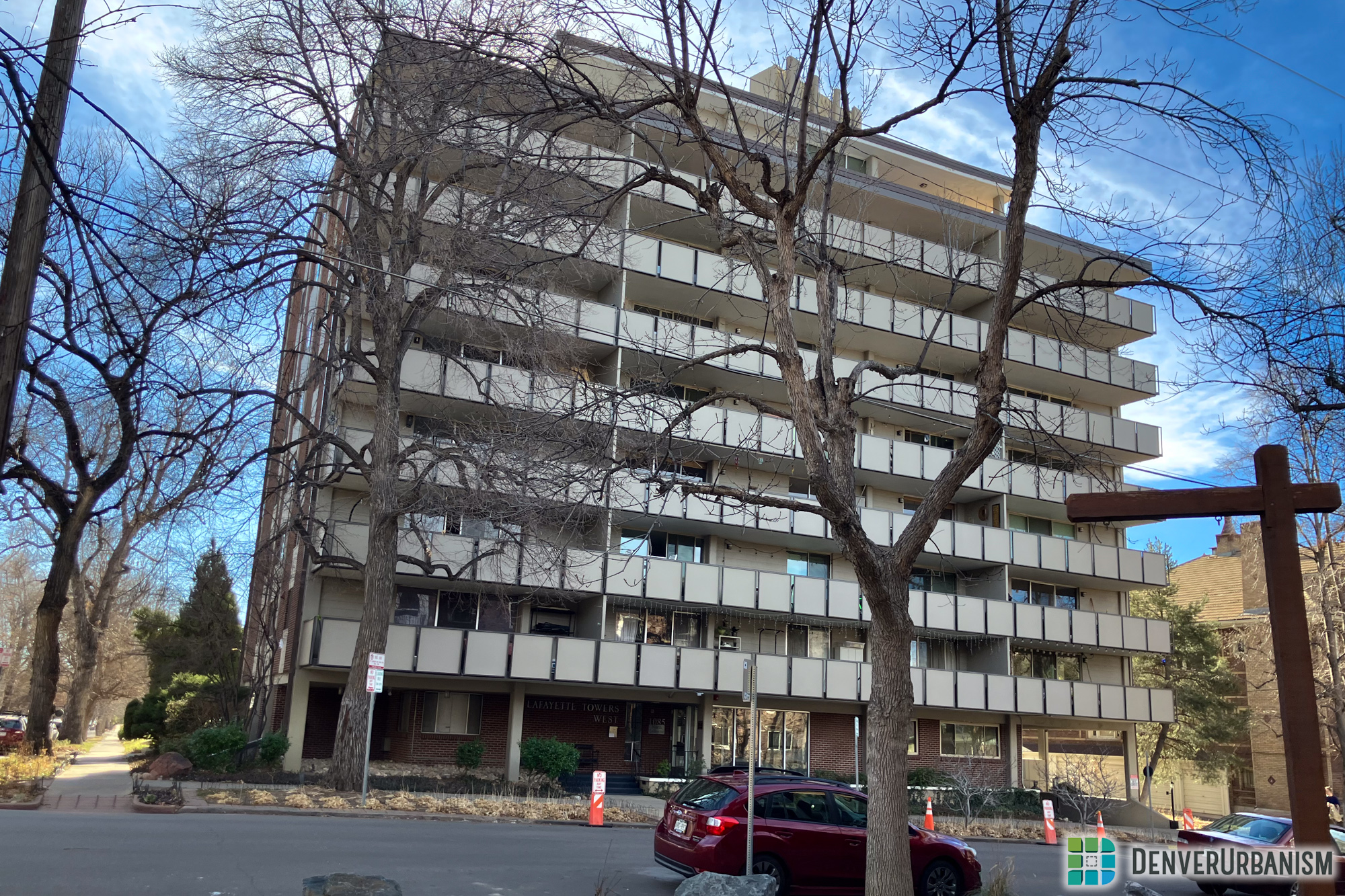
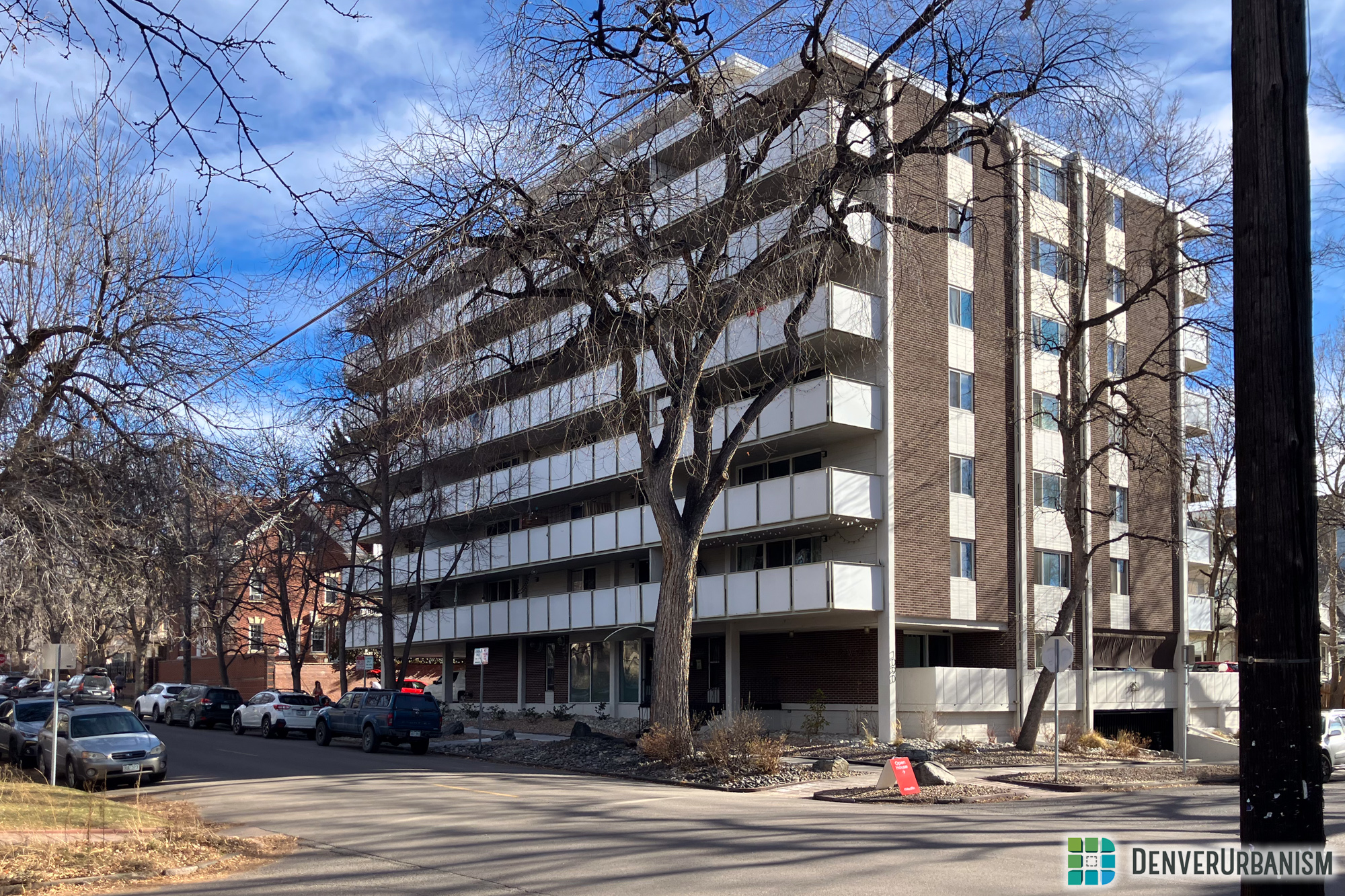
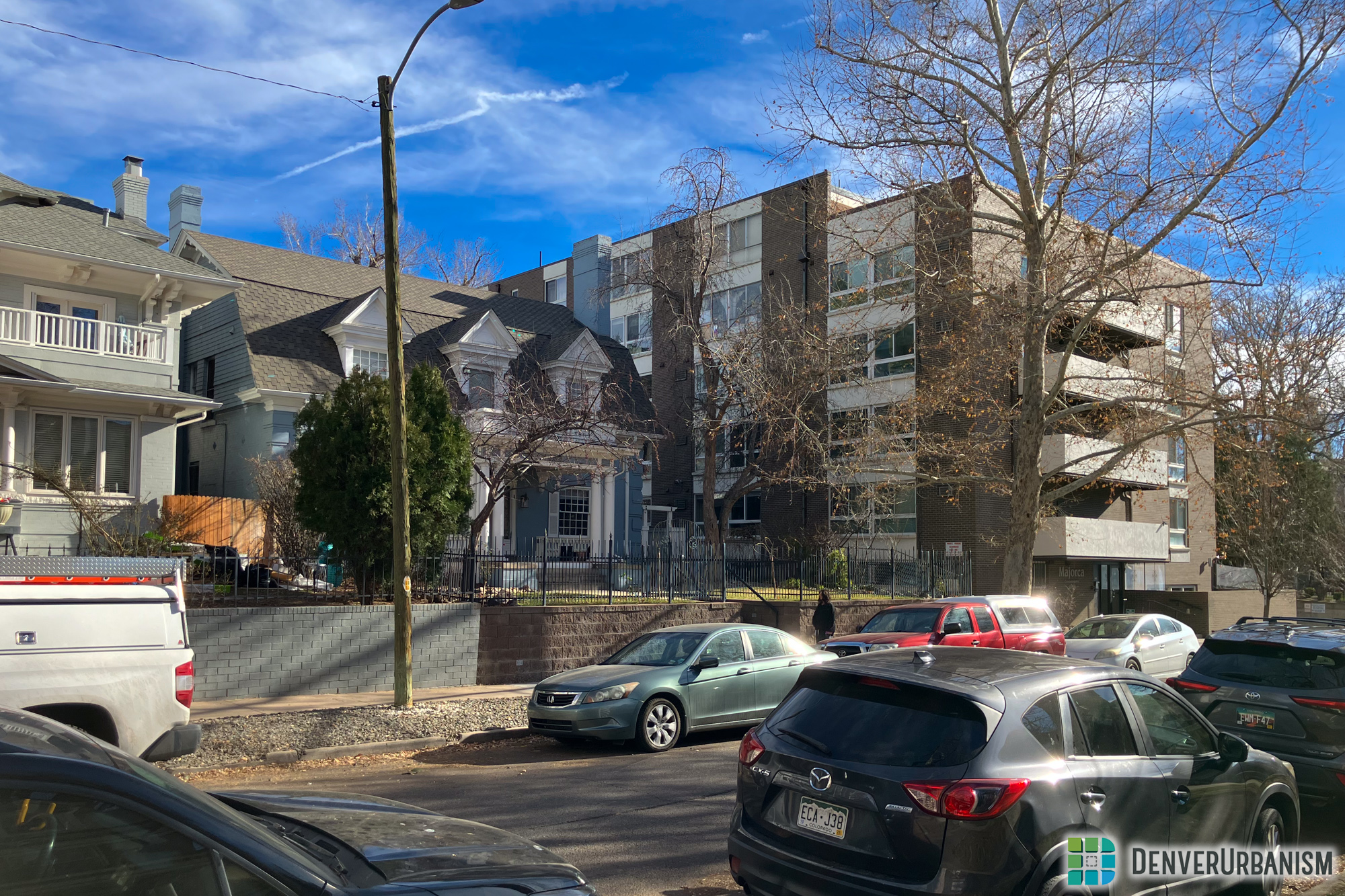
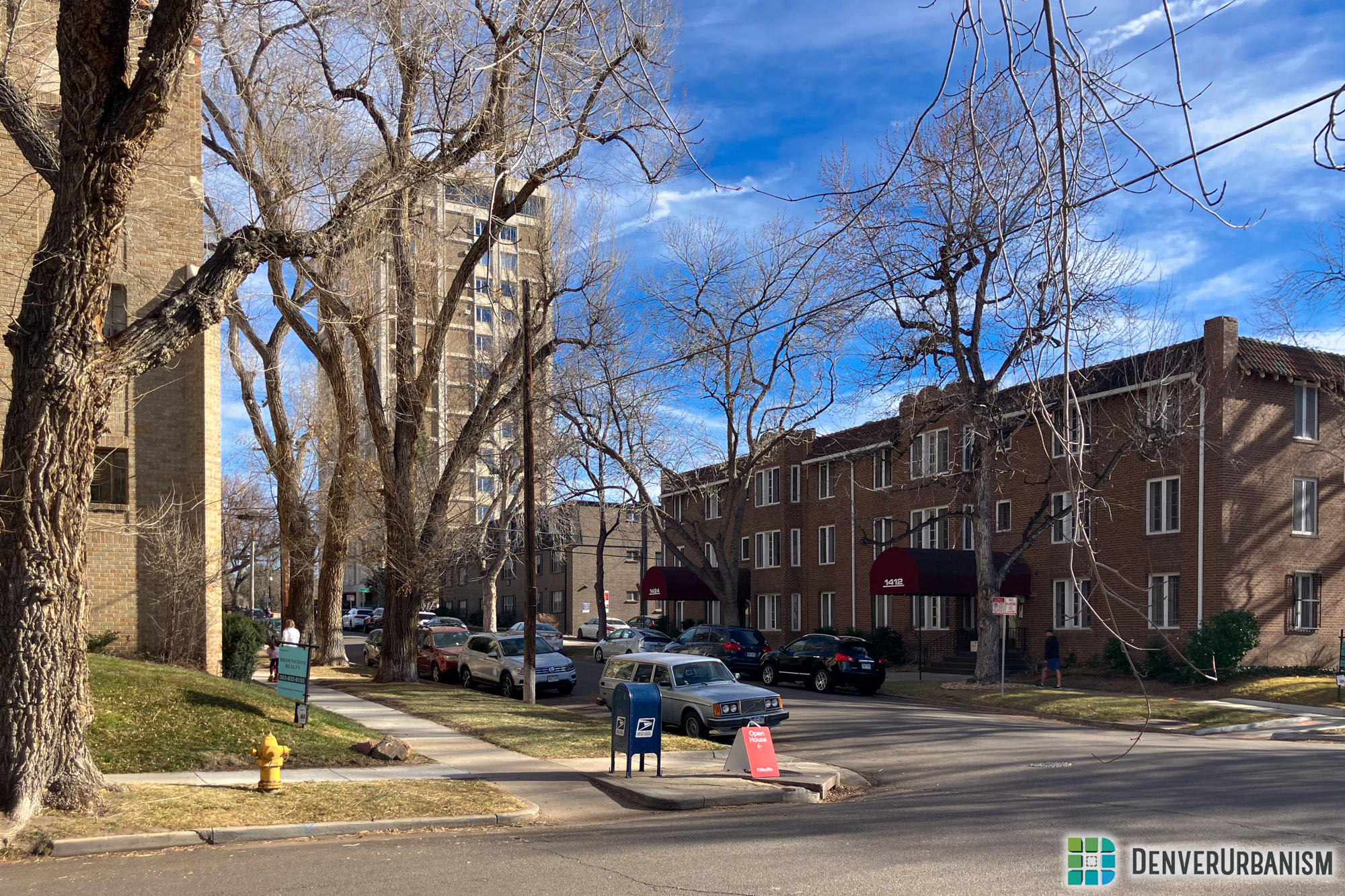
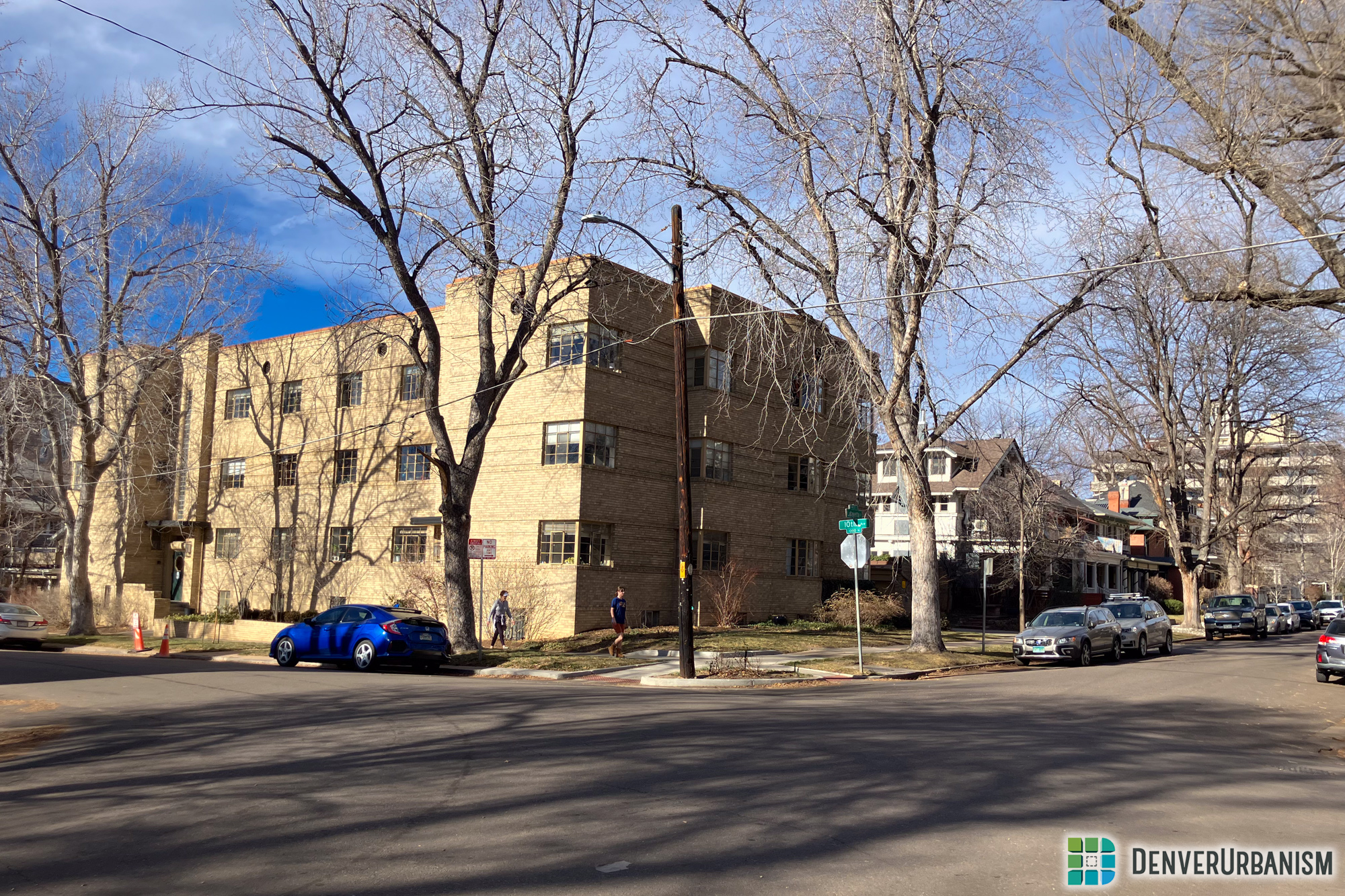
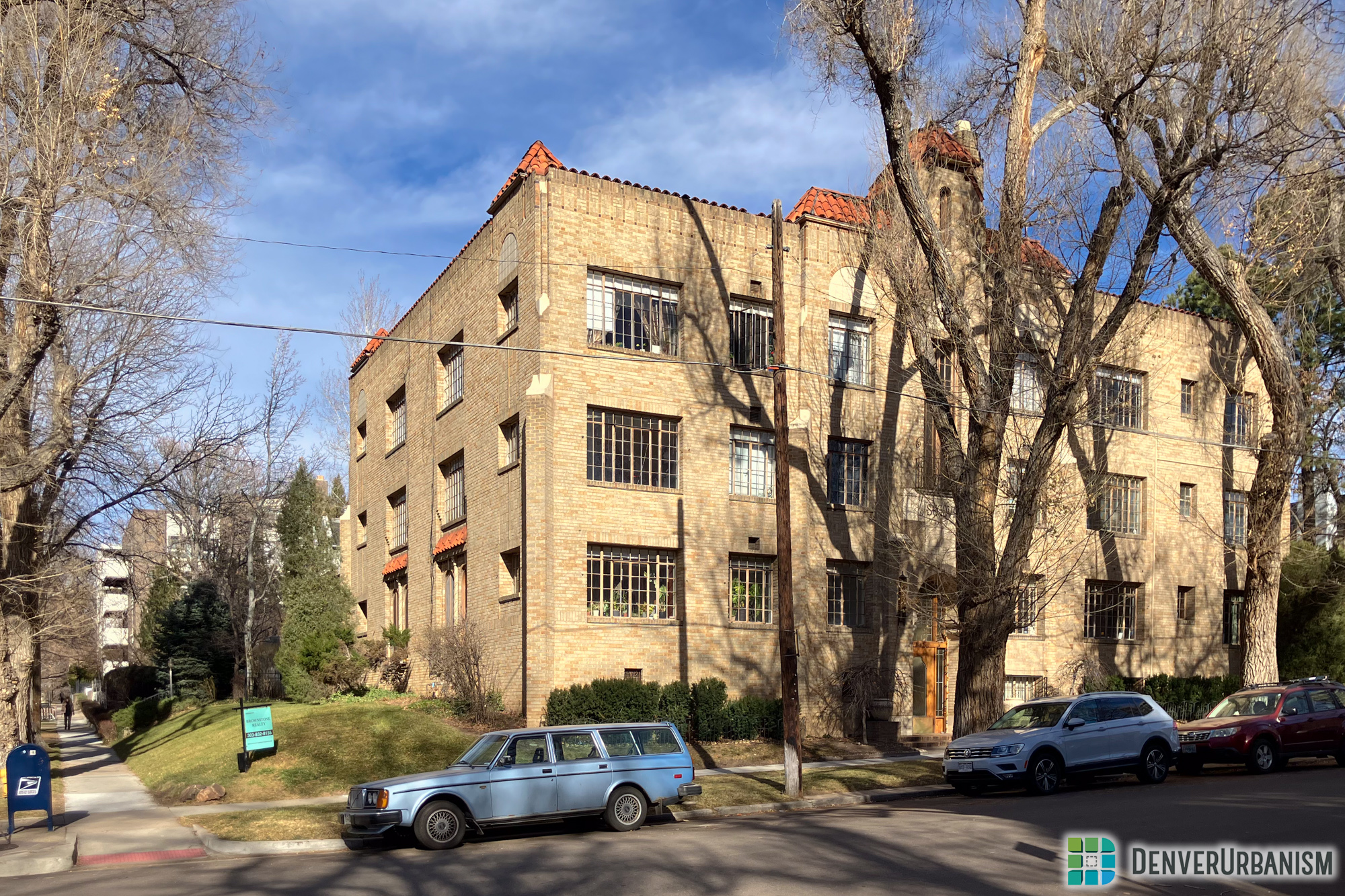
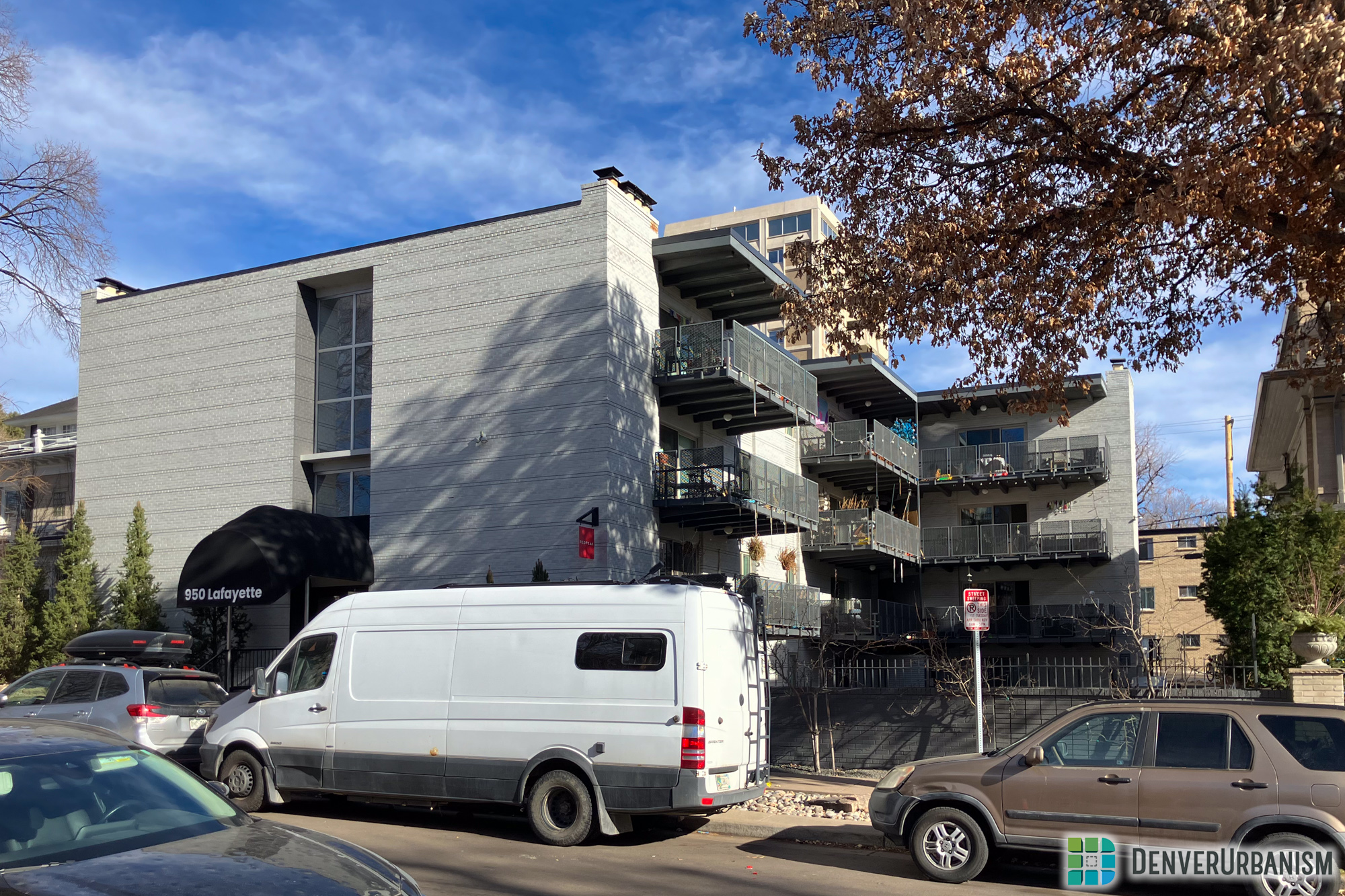
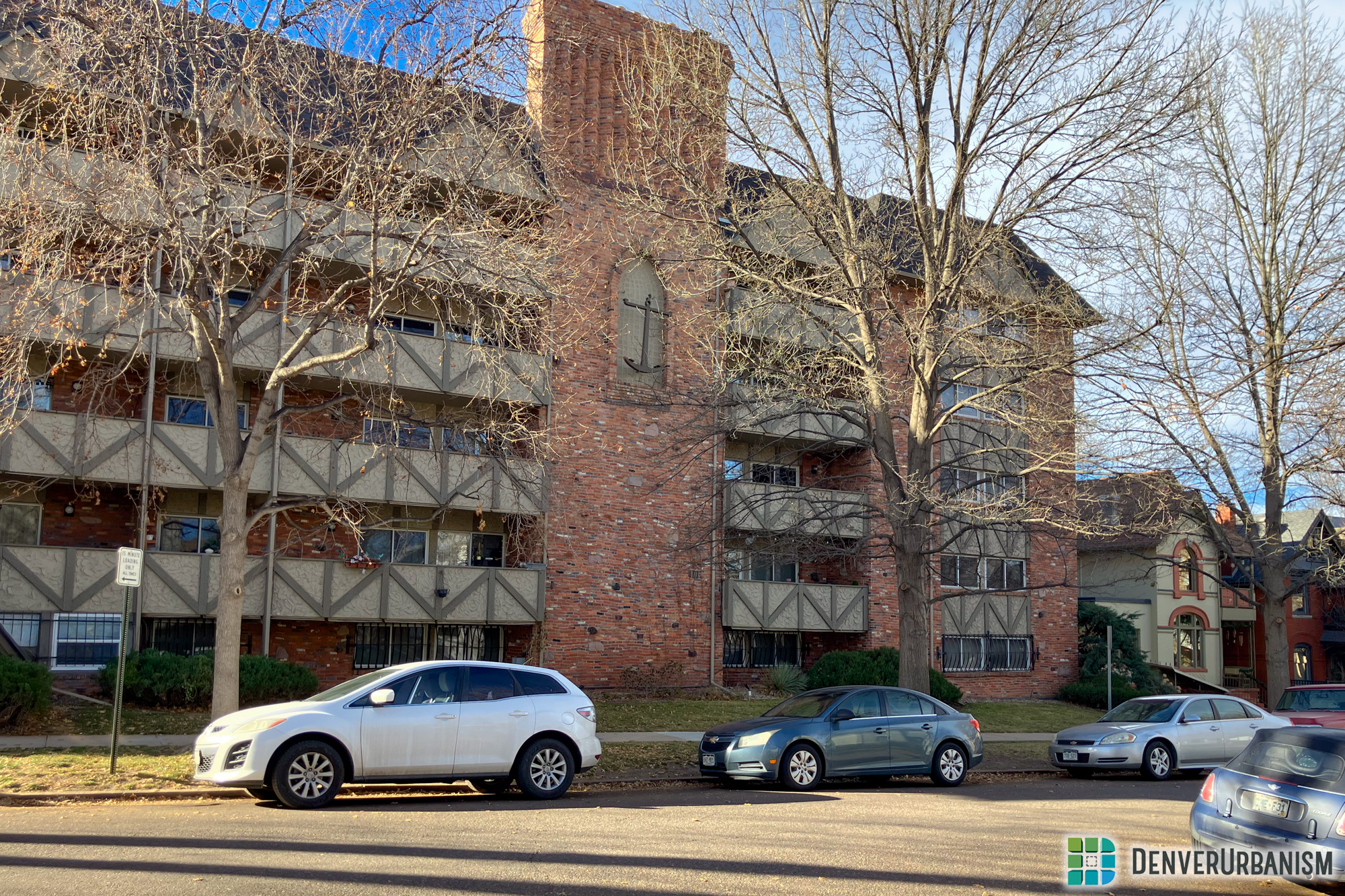
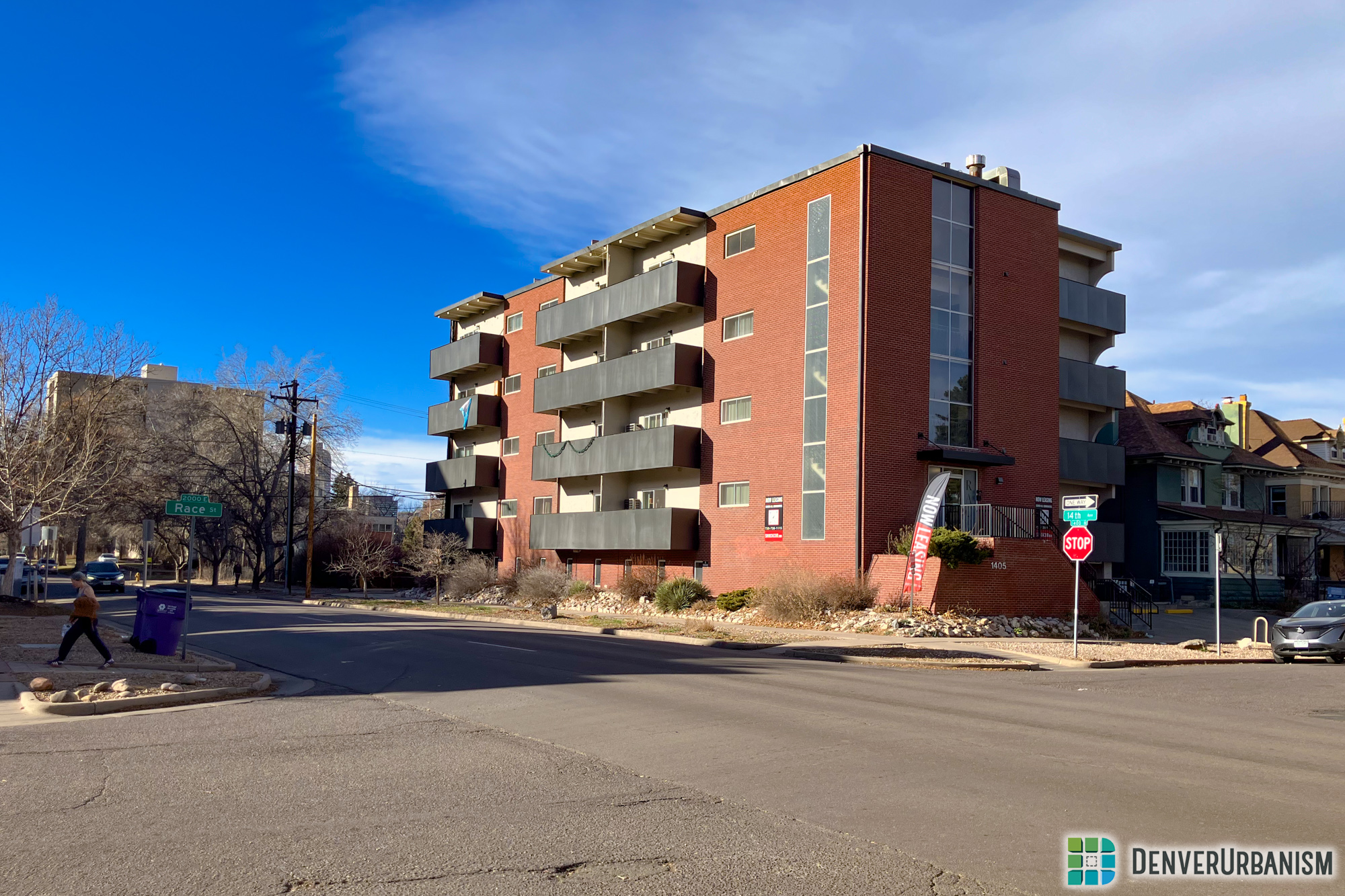
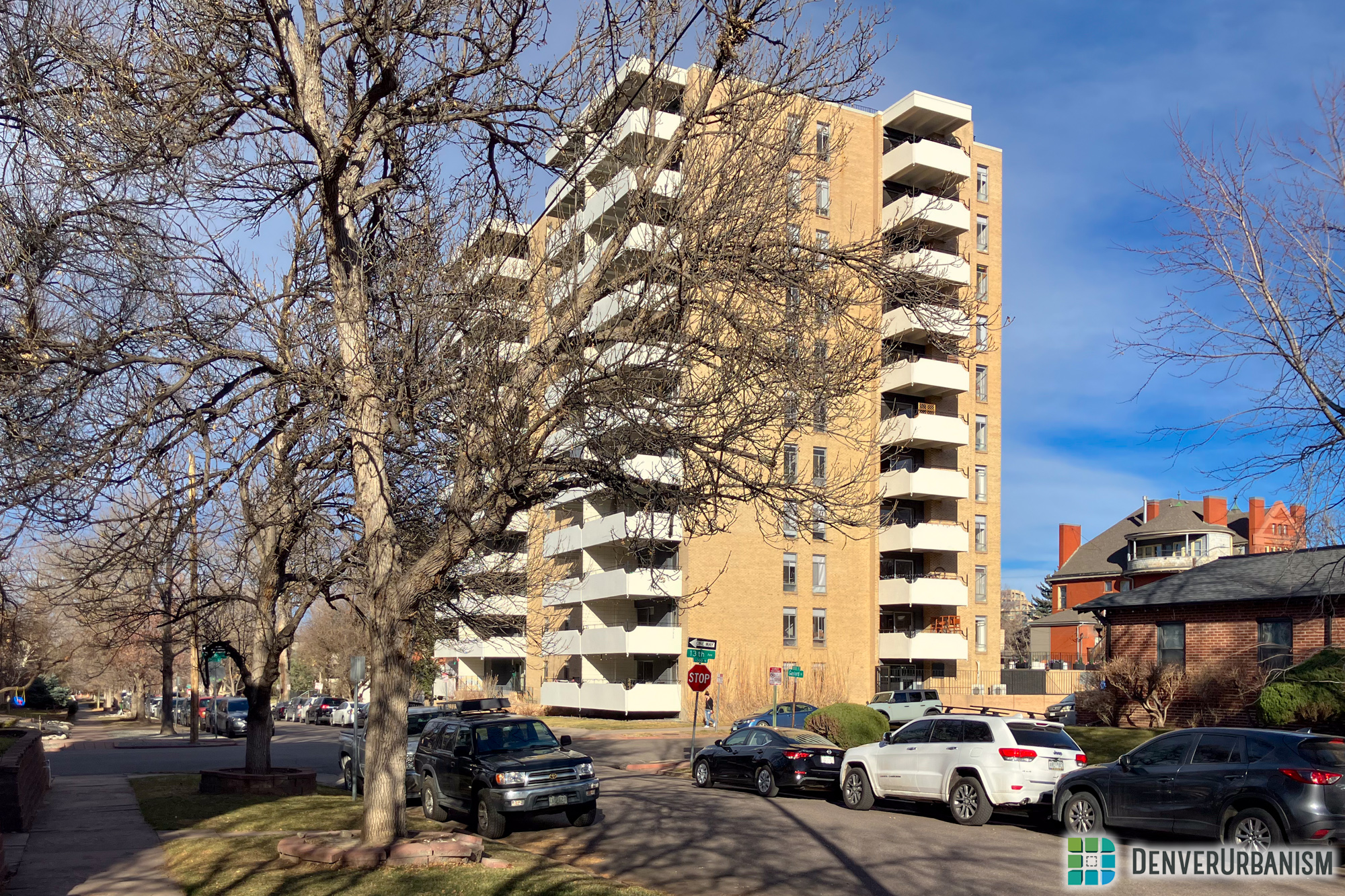
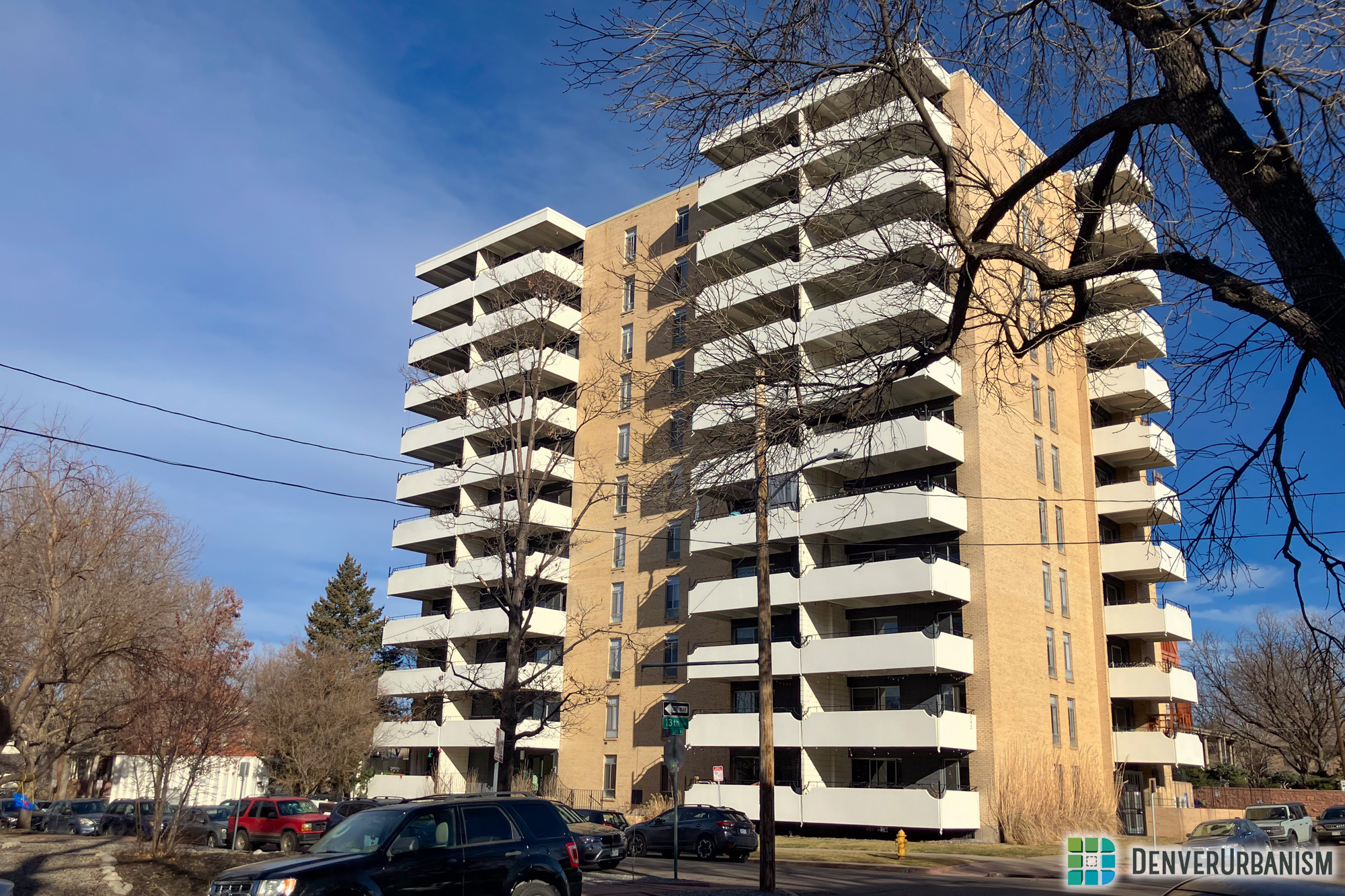
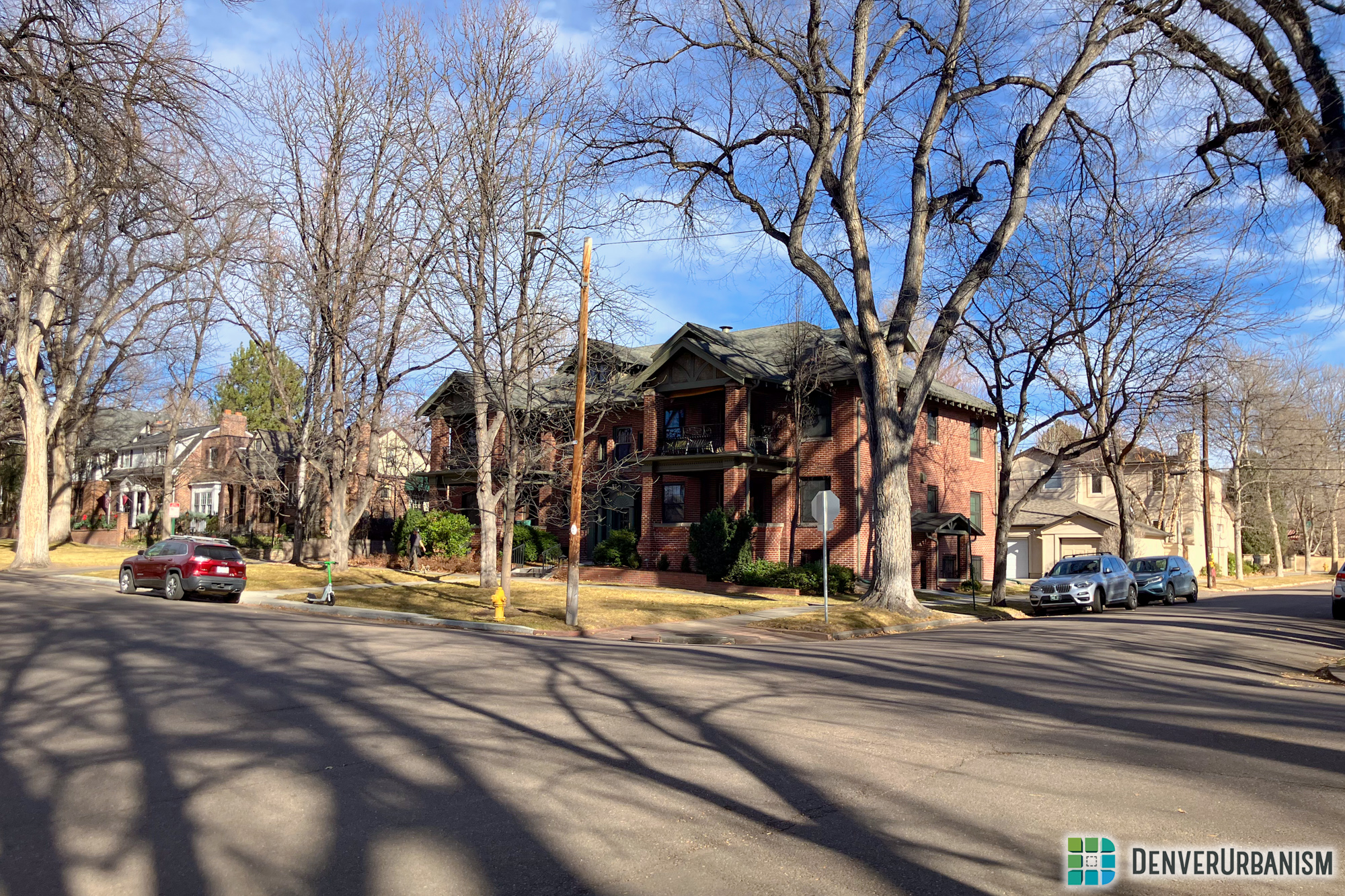
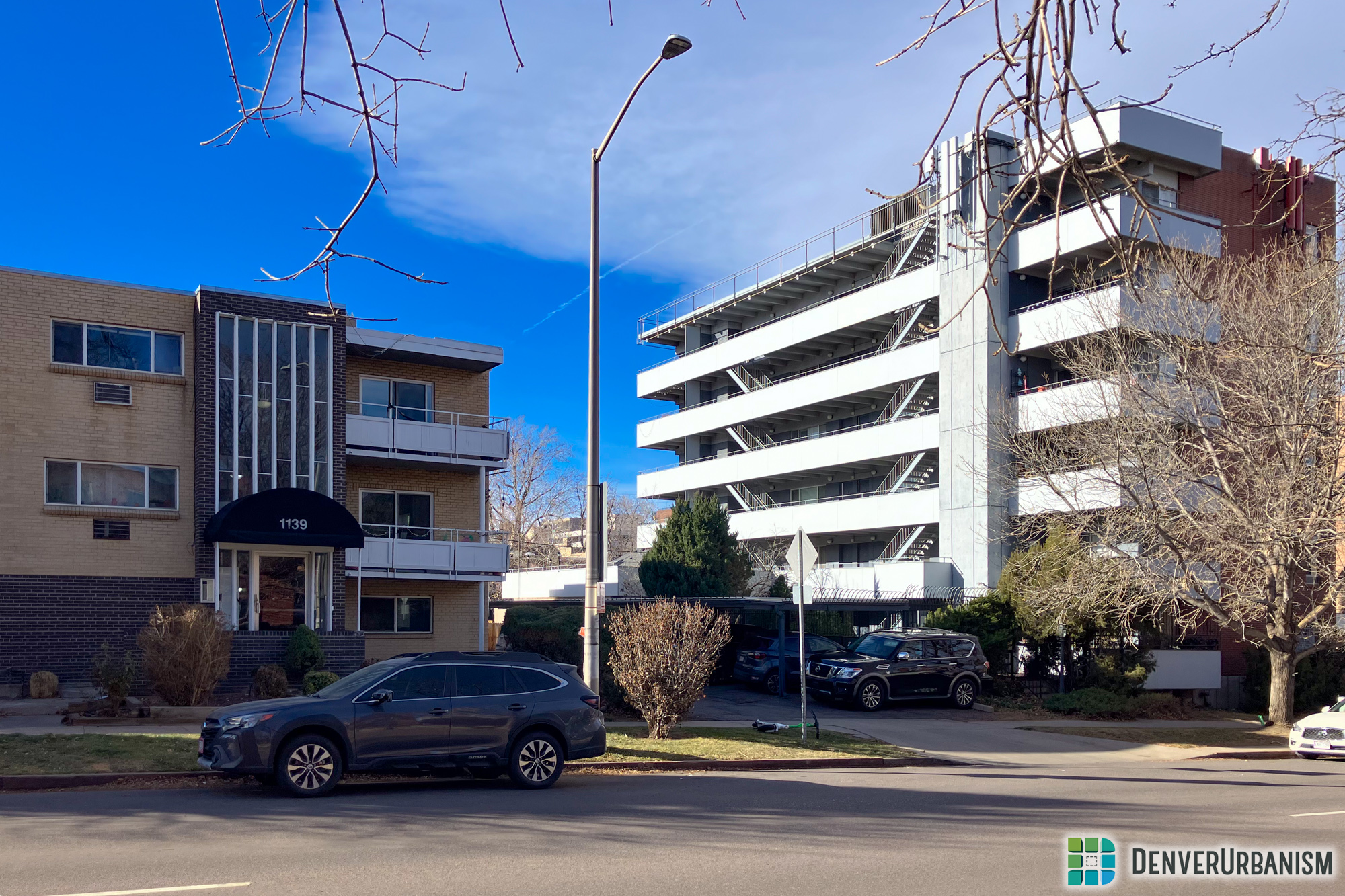
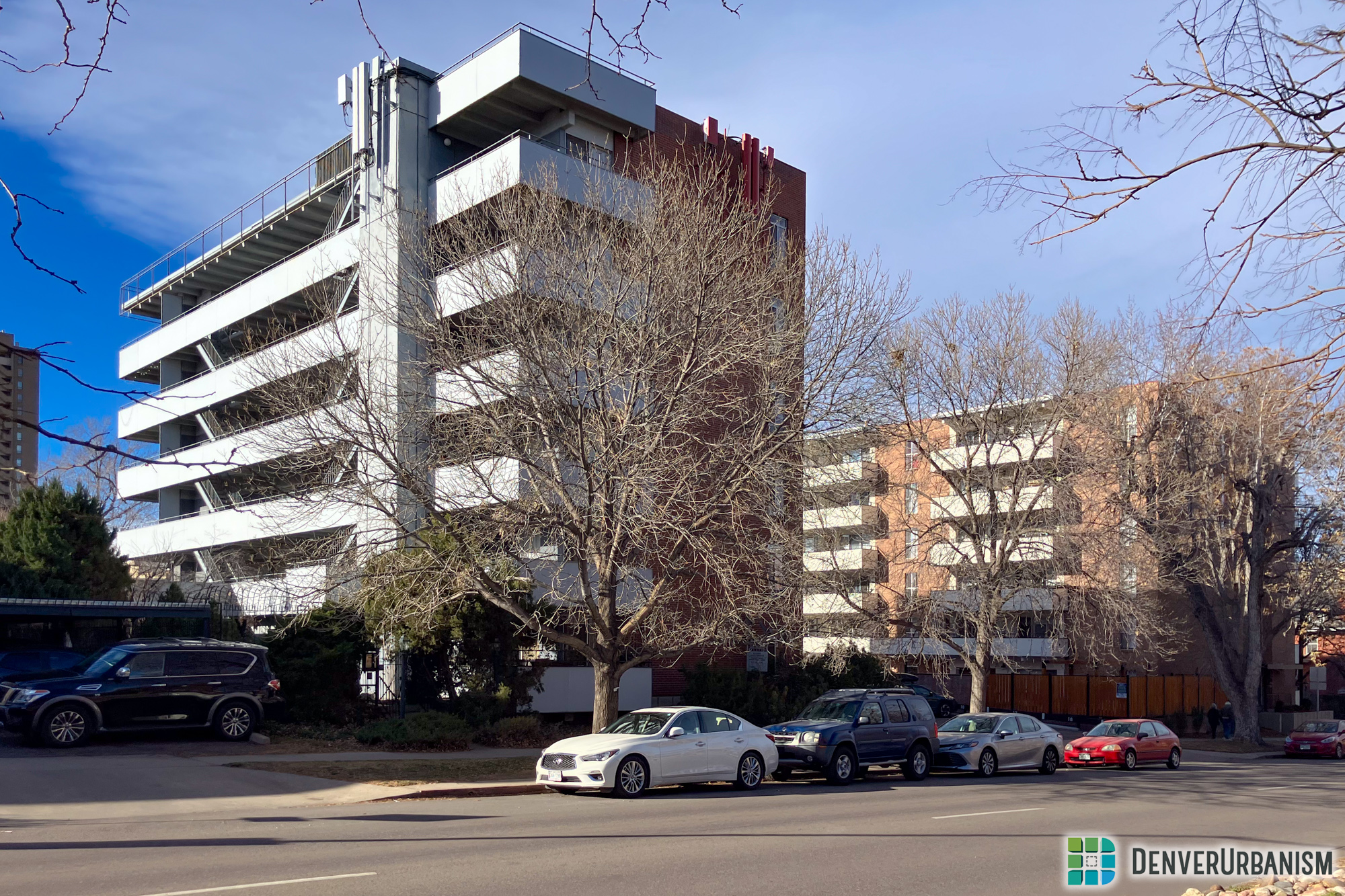
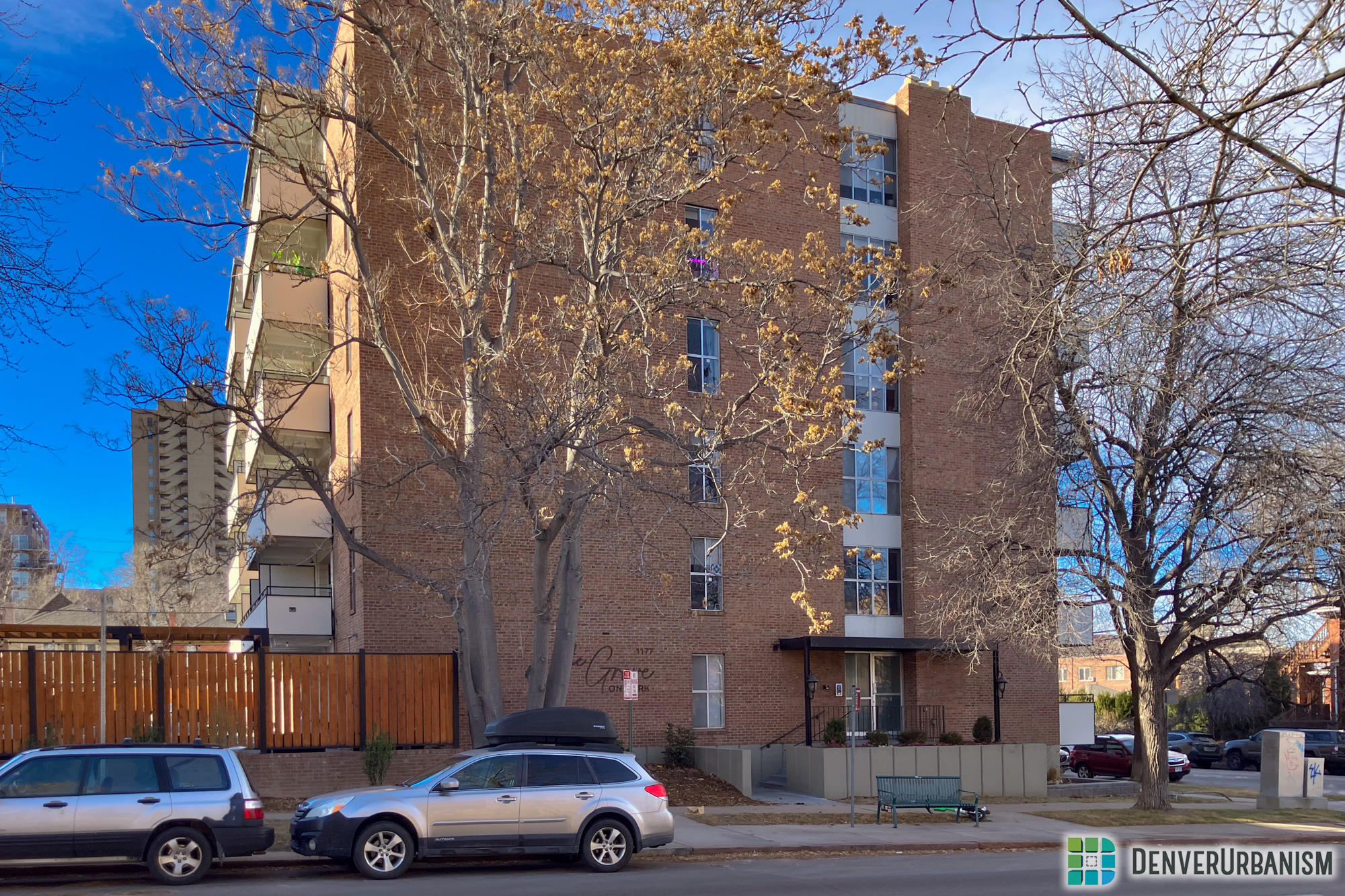
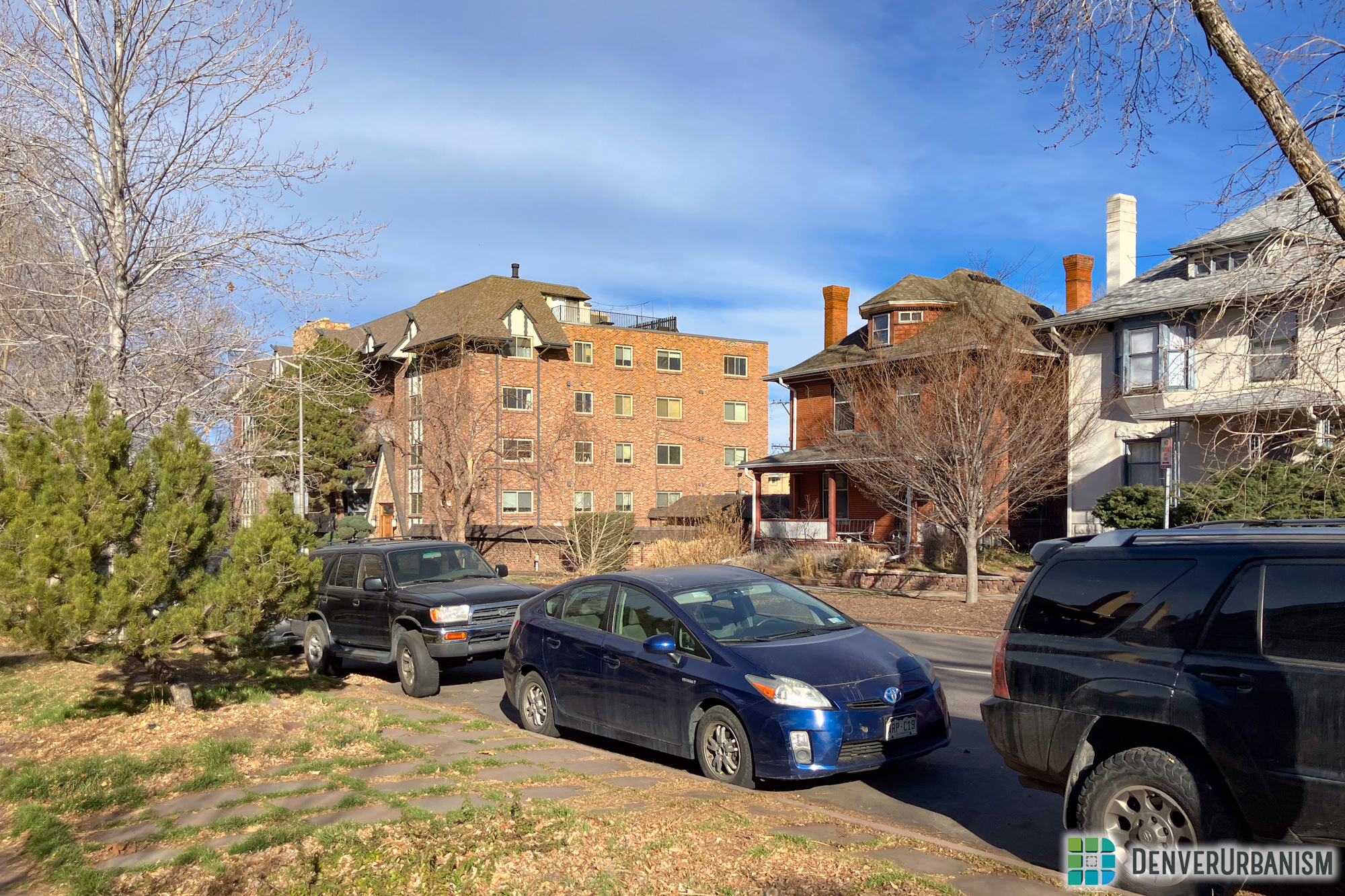
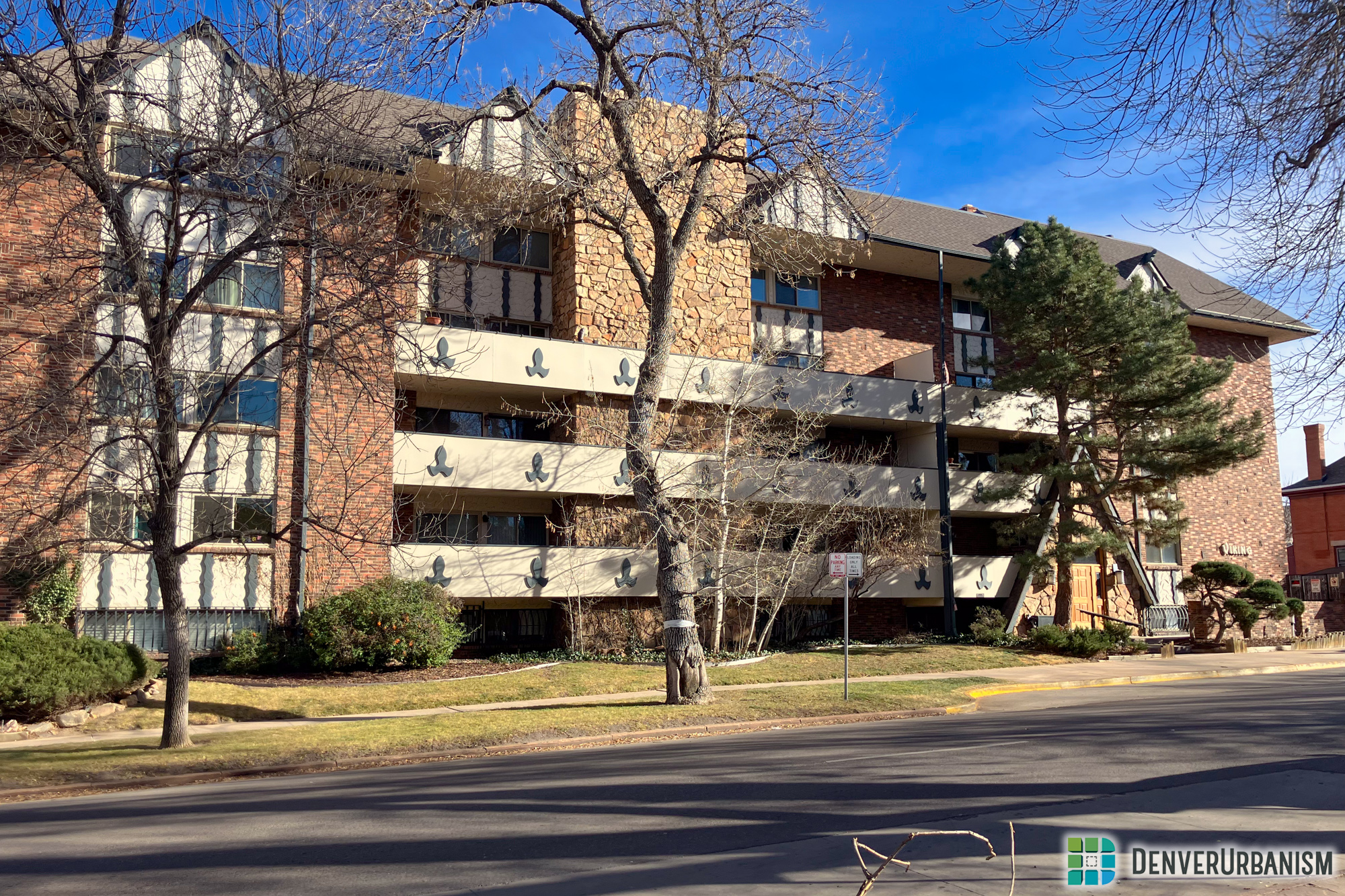
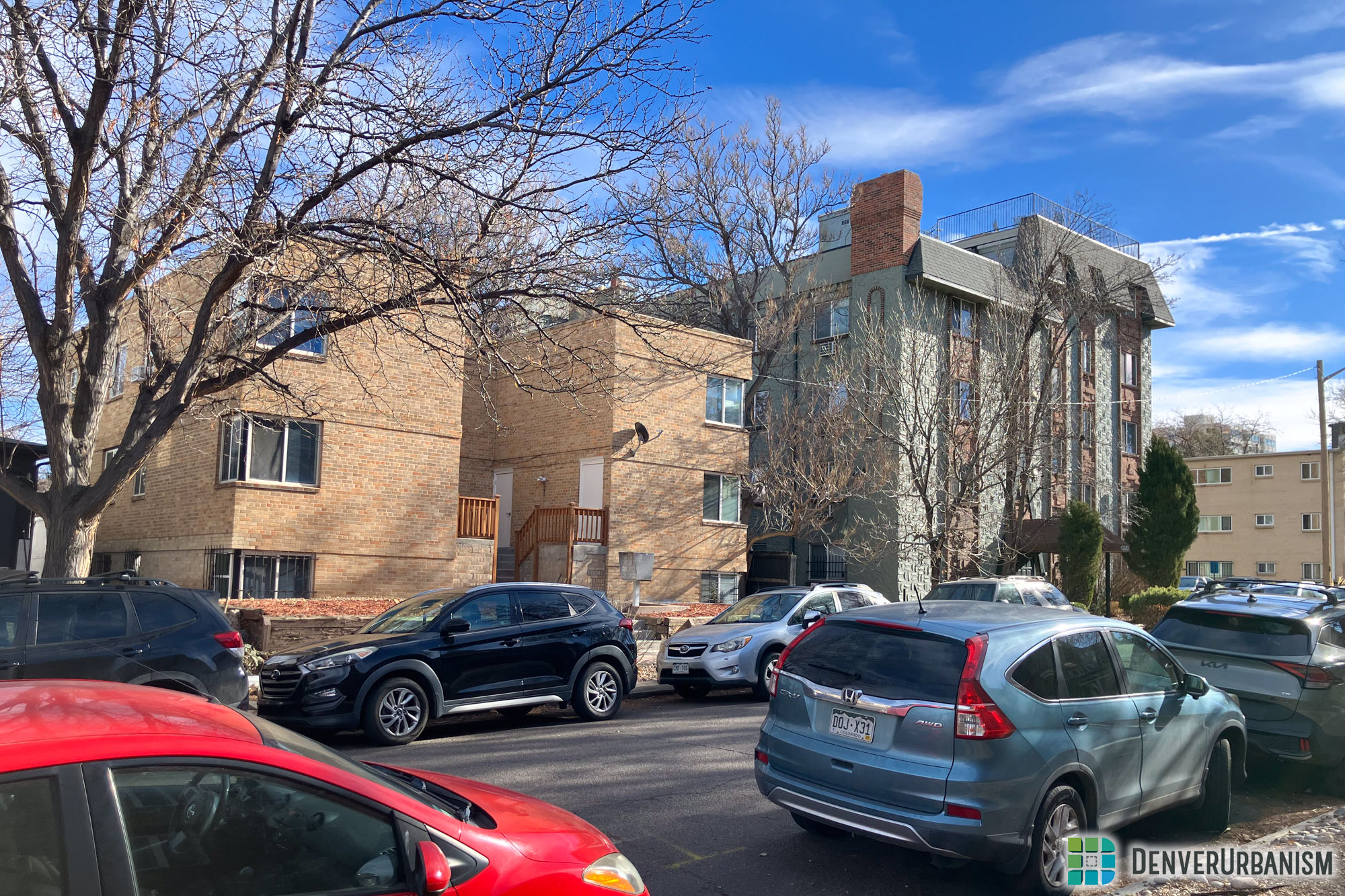
The vast majority of the neighborhood is zoned as one of three districts: G-MU-5, G-MU-3, and U-RH-2.5. (The letter at the beginning of a zone district describes the context—G means General Urban—while the number at the end basically means the number of floors allowed.) Recent neighborhood planning initiatives like the East Central Area Plan double-down on this ludicrous, law-breaking status quo. According to the Plan, broad swathes of the neighborhood should be no taller than 3 or 5 stories, and when height increases are made, “significant community benefits” are expected to be extracted from the development. Wouldn’t keeping existing homes intact benefit the community? Or do city planners not consider residents of The Ogden Nines part of their ideal community? (That building is 8 stories in a G-MU-3 district, by the by.)
The status quo is unacceptable, a patently fictitious application of zoning in one of Denver’s most truly urban neighborhoods. Why does every other neighborhood in Denver get the benefit of zoning that protects their built environment and maps out their ambitions? Do city planners hope that, eventually, most or all of these mid- to high-rise buildings get replaced by their preferred building stock, 3- to 5-story apartments and townhomes? They must be rooting for the failure of high-density city living at Penn Square Condominiums (19 stories above ground in a G-MU-5 zone). If they’re not rooting against density, then it must be the case that city planners simply don’t know about all these exceptions in Greater Capitol Hill, and don’t pay very much attention to the city they purport to shape and guide.
With long-overdue attention to equity, housing stability, and history then, we must upzone Greater Capitol Hill both to restore sense to this nonsensical zoning regime, and to make room for the next generation of apartment homes and condominiums in one of the ideal locations to build them. Yes, Greater Capitol Hill remains the right place to build new, dense housing. The East Central Area Plan, in all its wisdom, says so. Lest you, dear reader, go cold at the thought of losing the remaining historic homes and legalizing out-of-scale skyscrapers in Greater Capitol Hill, I’ll describe two important policies that protect what you might call the existing neighborhood character, even if a blanket rezoning were to be achieved. Then I will explain how rezoning will actually protect more of the neighborhood than is protected today.
Firstly, in 1968 Denver implemented a regulatory tool called “view planes” to restrict the height of new buildings in certain areas so that a view of the mountains can be maintained as a sort of public good. In this case, Denver’s Cheesman Park – Botanic Gardens View Plane applies to the whole of Capitol Hill. No, you’re not going to see the top floors of Park Regency lopped off to satisfy the city. But new buildings, like the Grant Apartments on 12th Avenue and Grant Street, or Capitol Square Apartments at 13th Avenue and Sherman Street must stay below the mathematically described height limit of the view plane, keeping them fairly modest. (There is also a view plane originating at City Park – Natural History Museum, and a limit on the prominence of buildings near Denver’s Civic Center.) So even if the various height limits that the City’s zoning imposes were thrown out, new development would still have to stay under the view planes that remain in effect. These view planes, love them or hate them, are a meaningful ceiling on even the most ardent YIMBY’s dreams for new high-rise construction in Greater Capitol Hill.
Secondly, in the last 50 years Denver has imposed a large number of historic districts and individual landmark designations over the remaining character buildings in Greater Capitol Hill. By my count, there are 91 individually landmarked structures in this Greater Capitol Hill area, as well as 16 historic districts. Though it is possible to build new, dense housing in a historic district, and it is possible to demolish a landmarked structure, every advantage is given to the incumbent built environment by these landmark protections. Additionally, every building in Denver must apply for demolition permission, and those buildings over 30 years of age that retain historic integrity are eligible to be landmarked and protected from demolition through our city’s strong historic preservation statutes. So if you enjoy the interplay of buildings of different eras, the contrast of stately manors across the street from high-rise condominiums, rest assured that these existing mansions will, in any event, remain mansions and not mid-rise apartments.
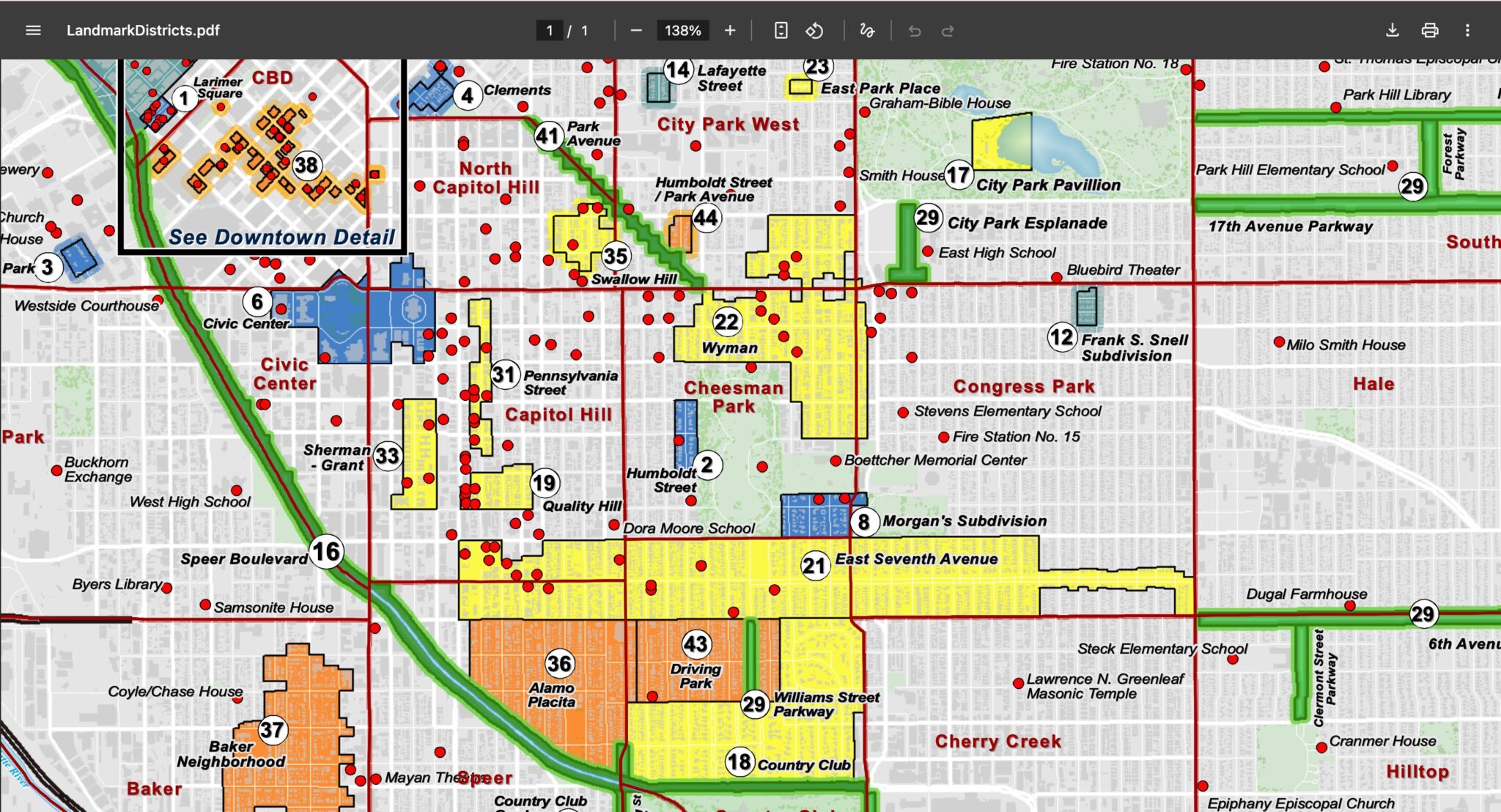
No matter the entitlement, a significant majority of the historic building stock in Greater Capitol Hill will remain; so why rezone if we aren’t going to build skyscrapers? First and foremost, we need to right the wrongful zoning in the neighborhood today which poses real risk to residents of buildings that are not compliant with their underlying zone district. If, for instance, one of the buildings I mentioned above were in poor shape or partially rendered uninhabitable and the building owner needed to make major renovations to the structure, what legal basis would the city have to extend new occupancy permits to a non-compliant structure? Even if a troubled building remained habitable, if the owner needed new capital for those renovations, many banks and lenders would not be willing to extend this credit to a building that lacked the entitlement. How does title insurance even work for these buildings? Turning the question around though, what political or legal defense is there for city continuing to devalue and endanger these buildings through zoning?
It is necessary for the city to initiate a rezoning to repair the harm of this egregious downzoning of the existing built environment. As a starting point, I propose rezoning all of Greater Capitol Hill that is both mapped as the General Urban context in Blueprint Denver and already zoned in a G- district to G-MU-8. (There are commercial and mixed-use nodes in Greater Capital Hill that aren’t in a G- zone district at the moment; let’s leave those zone districts alone, as we don’t want to cause new problems by re-zoning parcels out of existing legal uses. That would be crazy!) From there, planners can describe the higher intensity development that does exist as they do in other neighborhoods: G-MU-20 around Cheesman Park; G-MU-12 down 8th Avenue; and don’t forget the apartments and multifamily homes south of 6th Avenue that are imperilled by bad zoning.
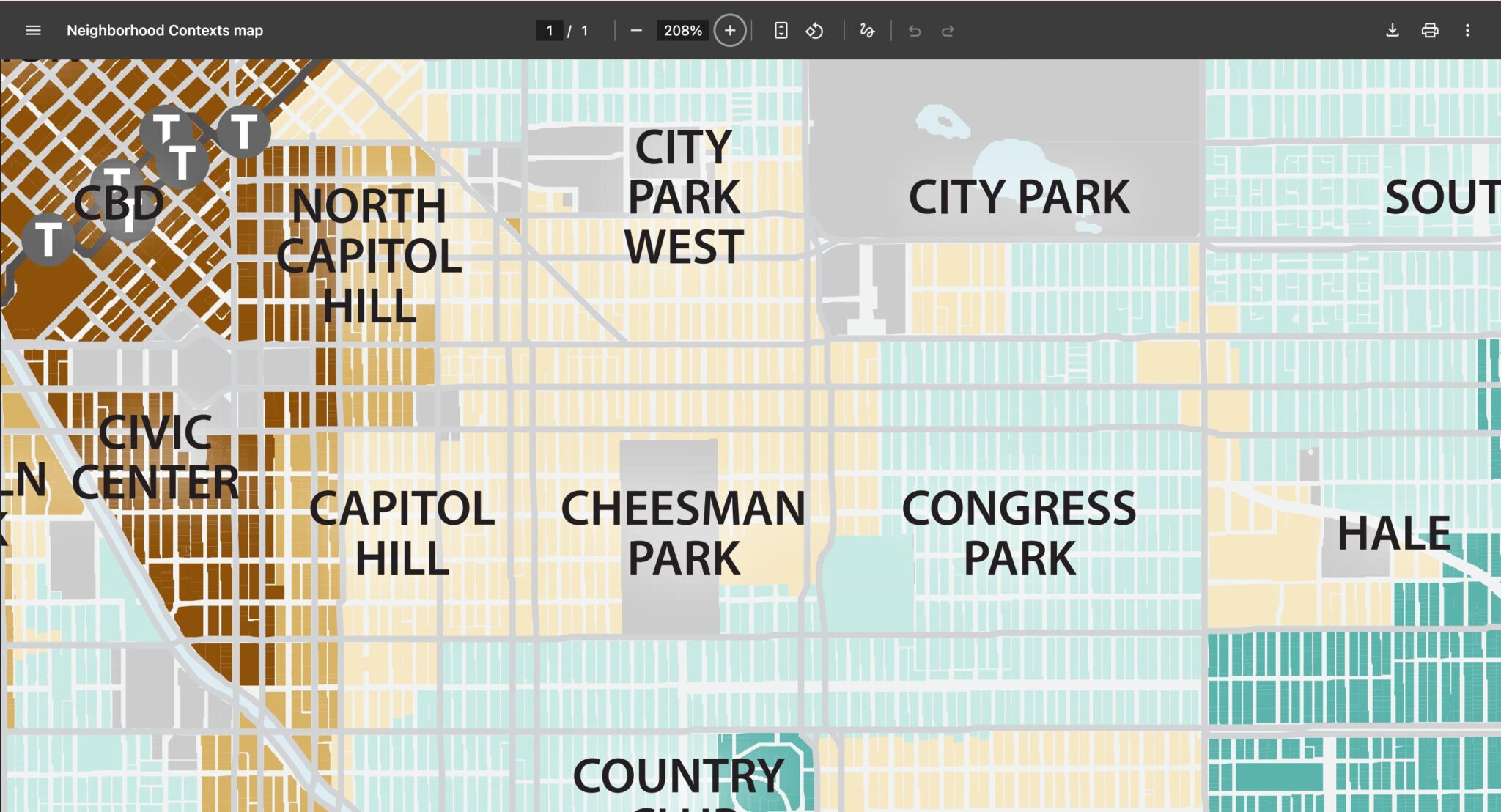
This modest increase in entitlement would better protect the built form and density where the median resident of Greater Capitol Hill right now resides, while allowing developers flexibility in the type of project they choose to deliver for the neighborhood going forward. G-MU-8 doesn’t mean every building must be 8 stories tall, far from it. Along East Colfax Avenue, the existing C-MS-8 zoning has been developed as 5-7 stories multifamily using Type V-over-I construction. Additionally, under the G-MU-8 zone district, landowners are still permitted an urban house, a duplex, or townhomes rather than apartments. No one loses the right to renovate their home or redevelop at their existing intensity. The choice or legal basis for historic, character-defining low density in Greater Capitol Hill remains protected by this kind of upzoning, which is more can be said for the character-defining multifamily communities left in legal limbo today.
It is time to stop treating our most vibrant, dense neighborhood as a series of zoning violations waiting to happen. Stabilizing the existing housing in Greater Capitol Hill can be achieved while allowing more housing at the same time. This means less sprawl in outlying suburbs, fewer carbon emissions, and more economic opportunity for businesses and entrepreneurs in the neighborhood. Additionally, for as dense as much of existing Capitol Hill is, there are plenty of uninteresting, non-historical houses, parking lots, and under-utilized parcels where new buildings could go. For instance, when advocates and the city negotiated the legalization of single-exit apartment buildings of up to 5 stories, when the city mapped out where those could be built, that map very prominently featured Capitol Hill. I haven’t heard panic about how single-exit apartments would ruin the neighborhood character forever, though allowing this new style of apartments would be allowing growth in Greater Capitol Hill. In that way, upzoning the neighborhood isn’t just about growth; it’s about ending the legal fiction that treats Denver’s historically dense success story as a neighborhood of offenders. Laws change; rules are modified to allow for new technology, to adopt the values of the day, and to respond to the needs of citizens. Upzone Greater Capitol Hill. We’d be doing justice to these ‘lawbreaking’ buildings and ensuring that the neighborhood’s future is no longer a crime against its own history.


While I agree with the general sentiment of this post regarding the importance of Denver’s densest neighborhood, I encourage you to read Articles 12 (Divisions 12.6 and 12.7) and 13 (definitions of Compliant and Nonconforming Structures) of the Denver Zoning Code. These structures in Cap Hill are not “lawbreaking”. The DZC allows for what are called Compliant and Nonconforming Structures, both of which are legal as their construction pre-dates the creation of the DZC. There are also allowances for the expansion, englargement, or alteration of those buildings without full compliance with the DZC. There is also allowance for voluntary demolition and reconstruction that allow for exceptions and “as was” reconstruction. Perhaps the zoning applied after the creation of the East Central Area Plan was faulty (albeit community-driven and council-adopted), but there ought to be no fear of zoning inspector crackdowns as these buildings aren’t illegal.