Skip to content
Archive of posts filed under the Transit category.

East Rail Line Progress – Ballasted Track!!

A very quick post with some very exciting news!

East Rail Line crews have begun laying the first sections of ballasted track! This section is just east of Sand Creek and the Central Park Boulevard bridge in Stapleton. You can get a great look at it as your drive across the new Central Park bridge – just take a look to the east as you go over the train tracks. Thanks to our friends at RTD for this picture!

This is a great sign of progress for the project! Additional ballasted track will be laid in the coming weeks out along Peña Boulevard, but it won’t be as visible as this segment. Check DenverUrbanism often for East Rail Line and other FasTracks corridor updates from both Robert Wilson and myself in the coming weeks!


Highway shoulders can become bus lanes, but it takes work

click to enlarge
Photo from Minnesota DOT.

Why not let buses drive on highway shoulders to get around congestion? That can be done, and it does often work, but it’s not quite as simple as putting a sign up and saying “let’s do it”.

CDOT is planning shoulder lanes on US-36 as part of the BRT project there. The original plan for US-36 was to have buses use the planned HOT lanes, but the HOT lanes are in the middle, difficult to access from buses that frequently enter and exit the highway. So shoulder lanes there will give buses the more direct lanes they need.

But why stop there? Most highways have shoulders, and a lot of them have buses. With pressure mounting to stretch dollars and improve mobility, creative ideas like putting buses on shoulders make a lot of sense.

The main complicating issue is that highway shoulders are usually too narrow and not free enough from obstructions to immediately open them up to buses. Interstate highway standards call for 9 foot shoulders, but you need at least 10 feet for a bus, and really 11-12 feet is preferable. So a typical highway shoulder will have to be beefed up in order to be used as a bus lane.

That’s a lot easier, and cheaper, than just about anything else you could do. But it’s still a construction project that has to be planned and funded.

On US-36 CDOT is incorporating 12-foot shoulders into its designs for the reconstruction that’s already happening for HOT lanes. But in places that aren’t already undergoing reconstruction, putting buses on shoulders isn’t as easy.

For safety reasons, buses are usually only permitted to go 35 miles per hour when using shoulders next to congested traffic. But that’s enough to get by the worst jams. If traffic is moving faster than that, buses just stay in the regular lanes.

Minneapolis has an extensive network of over 300 miles of shoulder bus lanes on highways. But it’s taken them over 20 years to get there. They have a continuous program that adds a few miles each year. They started with the low-hanging fruit, and have worked up to more complicated stretches.

This idea can improve bus service, draw more riders to transit, and reduce highway congestion. It’s win-win-win. But it takes planning, and isn’t free. CDOT should be commended for using it on US-36, but should also consider where else it might work.


East Rail Line Update: Denver International Airport Rail Connection

It has been a while since our last East Rail Line update and a lot of progress has been made between Denver Union Station and Denver International Airport. In this post I will focus on the area around DIA where some of the most noticeable changes have occurred. Starting at the airport; the foundation, first level and two main piers of the South Terminal building have gone vertical. These two main piers will become the main structural components of the Westin Hotel and East Rail Line Terminus; Airport Station.


To either side of the South Terminal Redevelopment Project, construction of the bridges and ramps that will support the automobile and bus entrances and exits are also progressing. The east side bridge has been on hold as foundation work is underway below, but the bridges on the west side are nearing completion.

At the southern end of the construction site (below) is where the East Rail Line platform will soon be. Currently we can see the concrete forms that will become the foundation where the trains will arrive and depart from.

In the next few months we should see more levels of the South Terminal Redevelopment project completed, girders and decking installed for the five entry and exit ramps as well as the installation of the iconic canopy frame. For those of you interested in following the Denver International Airport South Terminal Redevelopment construction without going out to the airport, check out the new construction webcam set up above this area, as well as refer back to the construction sequence video posted by Ken back in February.

After leaving the airport, the approach to the first bridge, which spans a drainage swell, is complete and the adjacent bridge, which spans the airport automobile exit, is nearly complete with just a few last piers and girders to go.


Between the western runway and 79th Avenue (Rental Car Row) is the right-of-way where the East Rail Line will travel. In this area, crews are currently installing the Overhead Cantenary System (OCS) piers, the poles that will hold the electrical and communication cables, and compacting the ground in preparation for railroad tracks and ties.

The second major development along this segment is that the final girder for the  bridge over Peña Boulevard is in place!  The 1,953-foot bridge is one of the largest bridges along this line and has been in the works since last fall.


Since this bridge spans one of the busiest roadways in the the Denver area, Peña Boulevard, Denver Transit Partners has scheduled a number of overnight girder installations this spring where crews close Peña Boulevard down to a single lane and work into the early morning. Below is a link to a cool time-lapse video of the final girder being installed last weekend.

Girder Installation over Pena Blvd

In my next post I will report on the progress made between Tower Road and Peoria Crossing.


FasTracks – What’s Next?

Now that the West Rail Line is open and FasTracks has moved back into the limelight, a lot of you may be asking “what’s next?” Billions of dollars of public transit investment buys a lot – it’s time to take a look at what’s on the horizon for the largest infrastructure investment ever undertaken by metro Denver voters.

For those looking for a little context or those who are new to town (it’s ok, don’t be embarrassed), FasTracks was approved in 2004 by 58% of metro Denver voters. The plan authorized a sales tax increase of 0.4%, bringing the RTD tax from its previous 0.6% to a full 1% (equating to 10 cents for every 10 dollars). 0.6% of that sales tax is reserved for base system expenditures (existing buses and light rail trains, maintenance, etc.) and the new 0.4% was reserved for the FasTracks expansion project. The dollars cannot be transferred from base system projects to FasTracks and vice versa to help ensure that the base system would never be compromised to expand the system even farther while the FasTracks projects were protected by raids by the base system in the event of a drastic sales tax downturn (which we saw in 2009).

As seen in the map above, the FasTracks project included six new rail corridors (three light rail, three commuter rail), extensions to the (at the time) three existing corridors, over 21,000 new parking spaces, redevelopment of Denver Union Station into a multi-modal transit hub for the region, and a realignment of the RTD bus network dubbed FastConnects. The plan was to complete all of these components for $4.7 billion by 2017. FasTracks was a lofty and admirable goal. Obviously, a lot of controversy and conversation followed the revelation that FasTracks could not completed for the cost promised in 2004. That number has since increased to more than $6.5 billion. The scheduled completion of some components have even been pushed out to 2044 – 27 years later than expected. The exact reasons for that increase have also been well documented and will be the subject of a future post.

But moving on to better news – construction! It’s been almost nine years since FasTracks was approved by voters. So…what’s going on? The honest answer is A LOT.

  • RTD has 68 miles of rail (both light rail and commuter rail) under construction or under contract for construction, not to mention the 12.1 miles of the West Rail Line which opened last week. BILLIONS of dollars have been spent with billions more to go and thousands of people are hard at work on the multiple elements of FasTracks. Thousands have already benefited from this investment – and that’s before most corridors are even open.
 
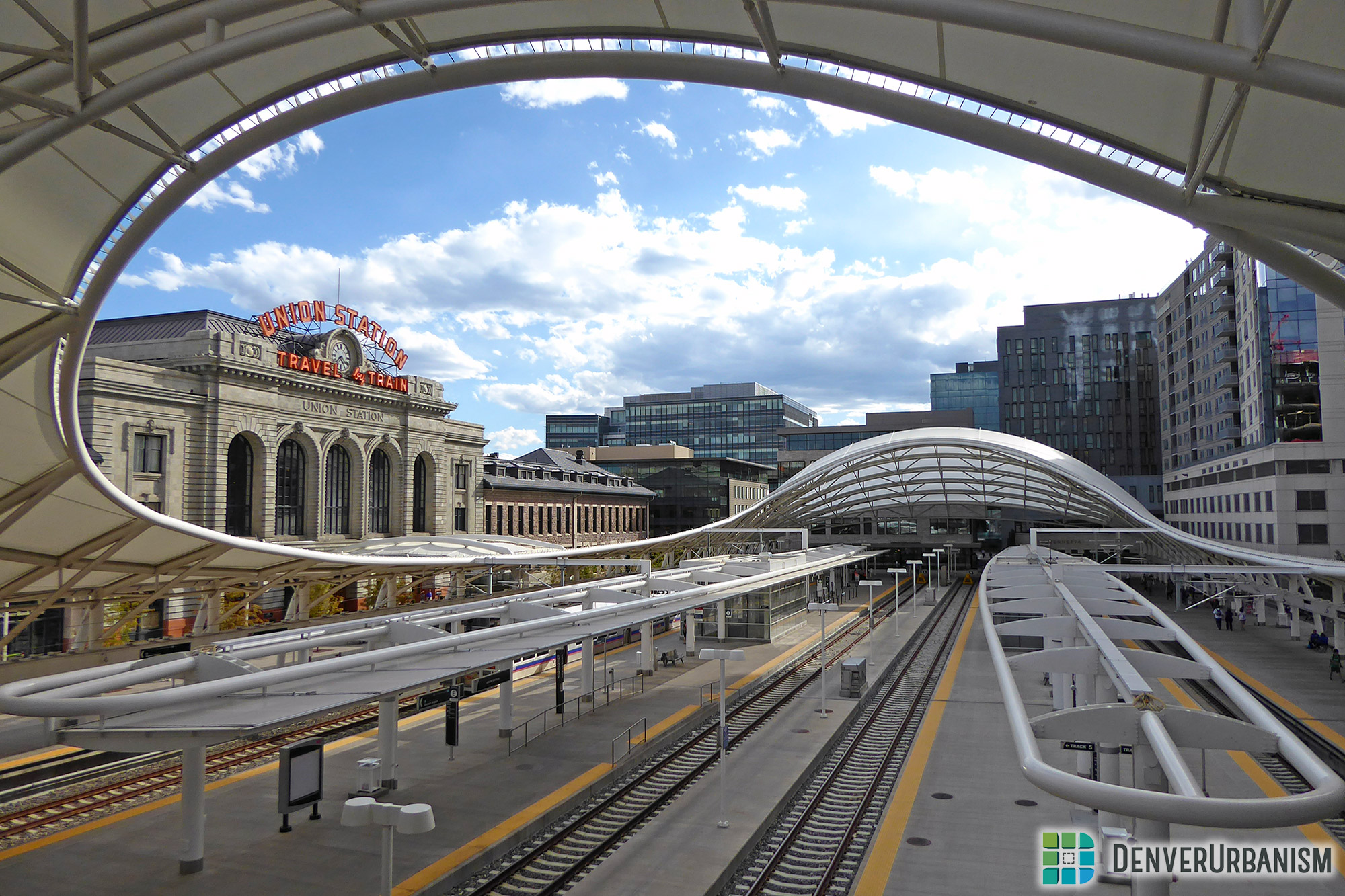
  • Denver Union Station (nearly $500 million in construction) will be complete in May of 2014. DUS includes a new light rail station (complete), a new 22-bay underground bus terminal, and a new commuter rail terminal. The historic Denver Union Station building at 17th and Wynkoop Streets is also being transformed into a hotel. This new hotel will open sometime later next year.
 
  • The $2 billion Eagle Project (includes the East Rail Line, Gold Line, the first segment of the Northwest Rail Line, and the commuter rail maintenance facility) is under construction. The project is the first transit public-private partnership in the nation and received a $1.03 billion Full Funding Grant Agreement in 2011 from the US Department of Transportation.
 
  • The I-225 Rail Line is under construction by Kiewit Construction who submitted an unsolicited proposal to RTD in 2012.
  • The North Metro Rail Line will be constructed to 72nd Avenue. An unsolicited proposal was submitted in early 2013, which RTD deemed to have technical merit. The exact specifics of that proposal, including cost or which station the proposal would build to, have not been made public.
  • The Northwest Area Mobility Study (NAMS) is underway to “develop consensus among RTD, Colorado Department of Transportation (CDOT), and corridor stakeholders on cost-effective mobility improvements to serve the northwest area. The analysis should provide RTD with a prioritized list of improvements which will have the support of all interested parties.”

That may seem like a lot of work – and it is. But make no mistake, there’s a lot left to do. The Northwest Rail Line from Denver to Boulder and Longmont, the Central Corridor Extension north along Downing to connect to the East Rail Line, the Southeast Rail Extenstion to Lone Tree, and the Southwest Rail Extension to Highlands Ranch are still in the works, but not funded. The future of these projects in the short-term remains up in the air. However, RTD is committed to completing ALL elements of the FasTracks project. Unsolicited proposals or other potential funding opportunities could always change the status of these unfunded projects. The North Metro and I-225 Rail Lines have both received unsolicited proposals and RTD has been at the forefront of engaging the private sector to help complete projects – there’s definitely interest out there.

When can we expect to see more projects complete? That’s a mighty fine question! Let’s take a look at the FasTracks schedule rundown:

  1. US 36 Bus Rapid Transit (BRT) Phase 1 (slip ramps, pedestrian bridges) – 2010 COMPLETED
  2. West Rail Line – 2013 COMPLETED
  3. Denver Union Station – 2014
  4. Downtown Circulator – 2014
  5. Commuter Rail Maintenance Facility – 2014
  6. US 36 Expansion (includes BRT capability) – 2015
  7. East Rail Line – 2016
  8. Gold Line – 2016
  9. Northwest Rail Segment 1 – 2016
  10. I-225 Rail Line – 2016
  11. North Metro to National Western Stock Show and 72nd Avenue – 2018

Not everybody agrees that FasTracks is a wise investment, and that’s to be expected. Multiple articles have been written (seemingly constantly) about how its a waste of taxpayers dollars, a boondoggle, or an investment in expensive technology and infrastructure that doesn’t justify its cost. FasTracks is a massive project – it’s bound to be controversial, yet everyone is entitled to their own opinion. Many people said the same thing about Denver International Airport in the early 1990s. We had an airport promised to be built for $3 billion which ended up costing nearly $5 billion – not to mention it was years behind schedule. I don’t think many can disagree that its economic impact on not only Denver, but Colorado as a whole, has been extremely positive. I’m not suggesting that FasTracks will have an impact similar to DIA – it’ll have a MAJOR impact, but not solely financial. This will fundamentally alter how thousands of us move on a daily basis, not to mention the environmental, economic development, and travel time savings benefits.

Infrastructure is complicated. It takes time. It is complex. FasTracks still has a ways to go before its full impacts can be felt. The West Rail Line (now known as the W-Line) is the first of what will be several major steps for the entire metro area. It’s taken a lot of money and energy to get where we are today, and we still have a long ways to go.

Get ready for a very exciting next five years for metro Denver!


Denver’s West Line Grand Opening: Celebrating Regionalism

For my last contribution to our DenverUrbanism series celebrating the grand opening of Denver’s new West Line transit corridor, I’m going to stick close to home and feature some of the activity surrounding Denver Union Station during the big opening weekend. Ryan Mulligan will wrap things up tomorrow with the eleventh and final post in our West Line opening commemorative series.


During the fare-free Saturday that featured spectacular weather even by Colorado standards, over 30,000 people rode the “W” somewhere along its 12-mile route, according to RTD. My fellow DenverUrbanism blogger Derek and I ventured west from Union Station on Saturday morning out to Jefferson County and, after a lunch trip to Downtown Golden via the City of Golden’s new free shuttle, we headed back to Union Station on Saturday afternoon. What struck me was the interaction between residents of the West corridor communities, solely because of the new transit line.


It was easy to see that there were a lot of people experiencing beautiful and vibrant Downtown Golden as visitors from elsewhere within the metro area. The sidewalks and restaurants were full of people, including a few that I recognized as Denverites. Similarly, after returning to Downtown Denver, I observed crowds of people spending part of their West Line adventure exploring the area around Union Station and the “three bridges” part of 16th Street between LoDo and Lower Highland. On several occasions I overheard people expressing interest and delight in discovering a part of the metro area they hadn’t really experienced before.


The new West Line does more than just give people another option for traveling between Point A and B. The increased interaction between people from Denver, Lakewood, and Golden due to the new West Line has broader implications, as it brings us closer together as a metropolitan community. Dotted lines on a map demarcating municipal boundaries become less important. If, through increased transit connections, we can view the Denver region not as a collection of 40-plus separate municipalities and counties, but as a single community of 3 million people that serves as the leader of the vast Rocky Mountain region and as a model for the rest of the nation, then we will all benefit.

What I experienced this weekend of West Line festivities was not just new transportation infrastructure, but another critical piece of cultural, economic, and political infrastructure that will allow the Denver region to prosper well into the future, and to maintain a competitive advantage over cities elsewhere in the country that just can’t get their act together.