Skip to content
Archive of posts filed under the Bicycles category.

Biking Along the W-Line

T- Minus 2 DAYS until the W-Line opens!

As many of you already know, one of the new project elements for the W-Line are 4 miles of  bike paths running alongside the new tracks. This is a great way to get to many stations along the corridor along with giving you the ability to use both your bicycle and the train when traveling around Denver.

Last weekend I decided to check out the new paths for myself and rode along almost the entire line. Why not the whole line? We’ll get there in a little bit. On this trek out west, I followed route ‘D10′. Use a bit of caution when looking up a map for this route as it hasn’t been updated with the new paths along the tracks. From the Central Platte Valley, I rode the South Platte Trail and headed west when it split just past the Colfax viaduct. Upon heading west, you are greeted with a nicely paved, windy trail through some open space.


Continuing down the path you go through Rude and Sanchez park which have the options of crossing pedestrian bridges to get into the surrounding neighborhoods.


New rail signals have also been put in so pedestrians can safely cross the tracks into the neighborhoods. Not to mention, you get some pretty amazing views of the Denver skyline throughout your journey!


The Sheridan Station’s Park and Ride is still under construction but once you cross through the station, the path continues right alongside the tracks.


At the smaller stations, the bike path splits off so you can board a train. However, the Wadsworth Station was slightly disappointing because you are unable to access the platforms from the bike path. There is a  fence that runs along the entire platform with signs telling you the platforms are inaccessible from the path. My fear is pedestrians and cyclists will hop the short fence to get to the platforms.


Once you get to Wadsworth, be prepared for a climb as you will encounter a few hills. Once you get to the top of the hills, the views are worth the climb!


These last three pictures show where the ‘D10′ route branches off to various streets and ends up terminating at the Federal Center. These transfers from path to street happen a few times but as long as you follow the signs you will be riding alongside the train most of the way.


On this one particular route you cannot follow the trains all the way to Golden. That doesn’t mean there aren’t paths and roads that continue following the W-Line but remember, the W-Line crosses the 6th Avenue corridor twice past the Oak Station which makes it a little tricky to follow.

Want to see more photos from my journey? Head on over to my Flickr set here, or click through the slideshow below!

Make sure you go check out these bike paths on one of these nice spring days and ride along with the trains! It’s a great adventure!


West Rail Line Progress – Jefferson County Government Center/City of Golden Station

T-minus 5 days!!

Time to take a look at the last station on our newest light rail line. The Jefferson County Government Center/City of Golden Station (quite possibly the longest station name ever) is located just to the south of the famed “Taj Mahal” Jeffco Courthouse at 6th Avenue and Johnson Road.

The station has a 705-space parking garage next to the platform for passengers. The garage is one of the nicest looking garages that RTD has constructed and it meshes very well with the architectural style of the nearby courthouse. The garage is ready for opening day – the spaces are already striped.


RTD has provided both racks and lockers for those who will be arriving or departing the station on their bikes. Easy connections to the Highway 93 bike path are ready to go to the north of the station as well.


One of the coolest features of this station is the tunnel created by constructing the garage over the tracks and into the hill to the west. The train come in on the first level of the parking garage, making this the only station in RTD’s light rail network where you can park above the train. Makes for some pretty interesting and unique sight lines as well.

Another very cool feature of this station is the fabricated concrete retaining wall to the west of the station. This was molded and painted to look like rock – I think they did an amazing job. There were several people fooled on the test trains I’ve ridden on.


DenverUrbanism will be West Rail Line-centric this coming week as we approach the opening. We’ll be taking a look at the history of the West Rail Line with Shawn Snow from History Colorado. Derek Berardi will give us a look at how some can live life without a car and focus solely on transit (including light rail). Ryan Dravitz will help us coast through biking along the West Rail Line. I’ll give a construction summary and what this light rail corridor could mean for the west side of metro Denver. Ken Schroeppel and Robert Wilson will keep us plugged in on the grand opening ceremonies and everything that goes on during the upcoming free fare day (April 27th). Make sure to check DenverUrbanism for the latest on the West Rail Line over the next week!


Denver B-Cycle Grows by 31 Stations in 2013

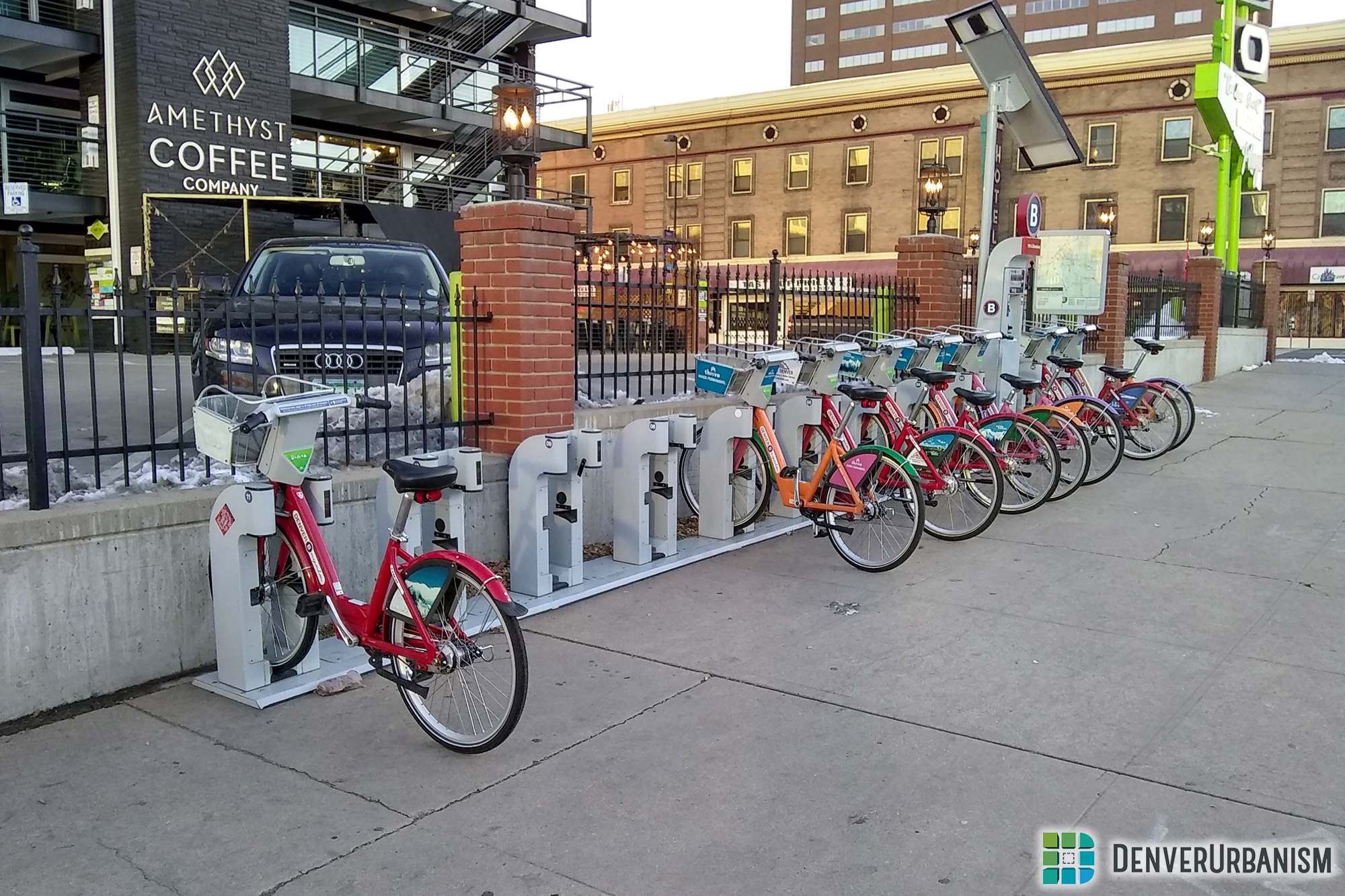
Using bike sharing as a viable mode of transportation in the Mile High City just got a lot easier. On March 17th, volunteers distributed hundreds of red Denver B-cycle bikes from their winter nesting spot at 27th and Larimer, where Denver Bike Sharing is headquartered, to 83 stations around Denver. This is an increase of 30 stations from last season and is a ringing endorsement of the success of the Denver’s bike sharing program. Denver’s B-cycle system is growing because it has been well managed with Executive Director Parry Burnap at the helm. Also, the city has provided great support for the network and, above all else, Denver’s healthy, active  residents have embraced the system with open arms since it opened three years ago, as demonstrated by the fact that the red bikes logged their half millionth ride before the end of the 2012 season.

New Museum of Nature and Science Station is one of two new stations in City Park

In addition to the 30 stations that will open this spring, Denver Bike Sharing will add at least one more station this summer at 33rd and Arapahoe in the Five Points/Curtis Park neighborhood as part of the redevelopment of the old Denver Horse Barn. That historic structure, which once housed the horses that pulled streetcars along Denver’s roadways before electric cables were added, is being transformed into the new headquarters for Denver Urban Gardens and Engineers Without Borders. The addition of that B-cycle station, courtesy of the Denver Housing Authority, is a fitting tribute to the sustainable transportation history of this historic structure, and brings bike sharing to the northern end of Five Points.

In all, the expansion of the 31 new stations will cost $1,292,351. Twenty-seven of the stations were funded through grants from the Federal Highway Administration and the Colorado Transportation Commission with matching grants from the Anschutz and the Gates Family Foundation and other local foundations. Four of the stations: the Denver Zoo, Denver Museum of Nature and Science, Auraria Campus, and the aforementioned historic Denver Horse Barn location, were paid for with money from the Walton Family Foundation, the Piton Foundation, Encana, the Denver Zoo, the Denver Museum of Nature and Science, the Auraria Campus Sustainable Campus Program, and the Denver Housing Authority.

Courtesy of Denver Bike Sharing, here is the full system map with existing B-cycle stations in blue and the new stations in red. The second map is a close-up of the Downtown area. Click/zoom to embiggen.

One can see a grouping of new stations along East 17th Avenue to serve the densifying, vibrant Uptown district and City Park. City Park’s two new stations at the Denver Museum of Nature and Science and the Denver Zoo are in response to consistent demand for stations in the park by Denver B-cycle customers. Bike to City Park Jazz anyone? Similarly, new stations are opening along West 32nd Avenue at Clay and Julian to meet the growing demand in West Highland. The addition of a station on South Broadway at 1st Avenue, will be welcomed by the busy South Broadway commercial district.

The expansion stations are generally placed near one another because, according to Dr. Andy Duvall who studies bike sharing systems around the world and was instrumental in the creation of Denver’s system, people in Denver are generally willing to walk three to four blocks to a station. So, placing the stations within eight blocks of each other creates the critical mass necessary to make the system viable. This can be frustrating to Denver neighborhoods farther from Downtown that are waiting for the arrival of stations in their neighborhoods, but Denver Bike Sharing is committed to continuing the expansion into outer Denver neighborhoods as funds and demand justify the expansion. The nature of bike sharing requires that the expansion happen in a concentrated manner to avoid creating distant “island” stations that get little use.

As bike sharing continues to expand and the number of citizens choosing bikes for commuting continues to grow, Denver will be faced with the challenge of building out our bicycle  infrastructure to meet this demand. The recent Denver B change petition that garnered over 1,000 signatures calling for a vertically separated bicycle facility on 15th Street through Downtown is an indication of pent up demand. I am confident that Mayor Hancock, Denver City Council, Denver’s new Public Works manager and Chief Sustainability officer are ready to meet this challenge and accelerate the implementation of a network of protected bike lanes to serve all those happy, healthy people riding sustainable red bikes through Denver in the years to come.


Denver Commits to Protected Bike Lane on 15th Street

BikeDenver is reporting that Denver Public Works Manager José Cornejo has committed to constructing a protected bike lane along 15th Street in Downtown Denver.

You may recall that a few weeks ago, the City announced that they would install a long-awaited bike lane on 15th Street—a critical connection for bicycle infrastructure in Downtown Denver—but that it would be only a standard striped bike lane, and not a protected/vertically-separated bike lane that Denver bike advocates and urbanists have been demanding since 2010. Fortunately, thanks to the efforts of BikeDenver, the Downtown Denver Partnership, and thousands of Denver citizens who spoke up, this important bicycle facility will become a reality. 

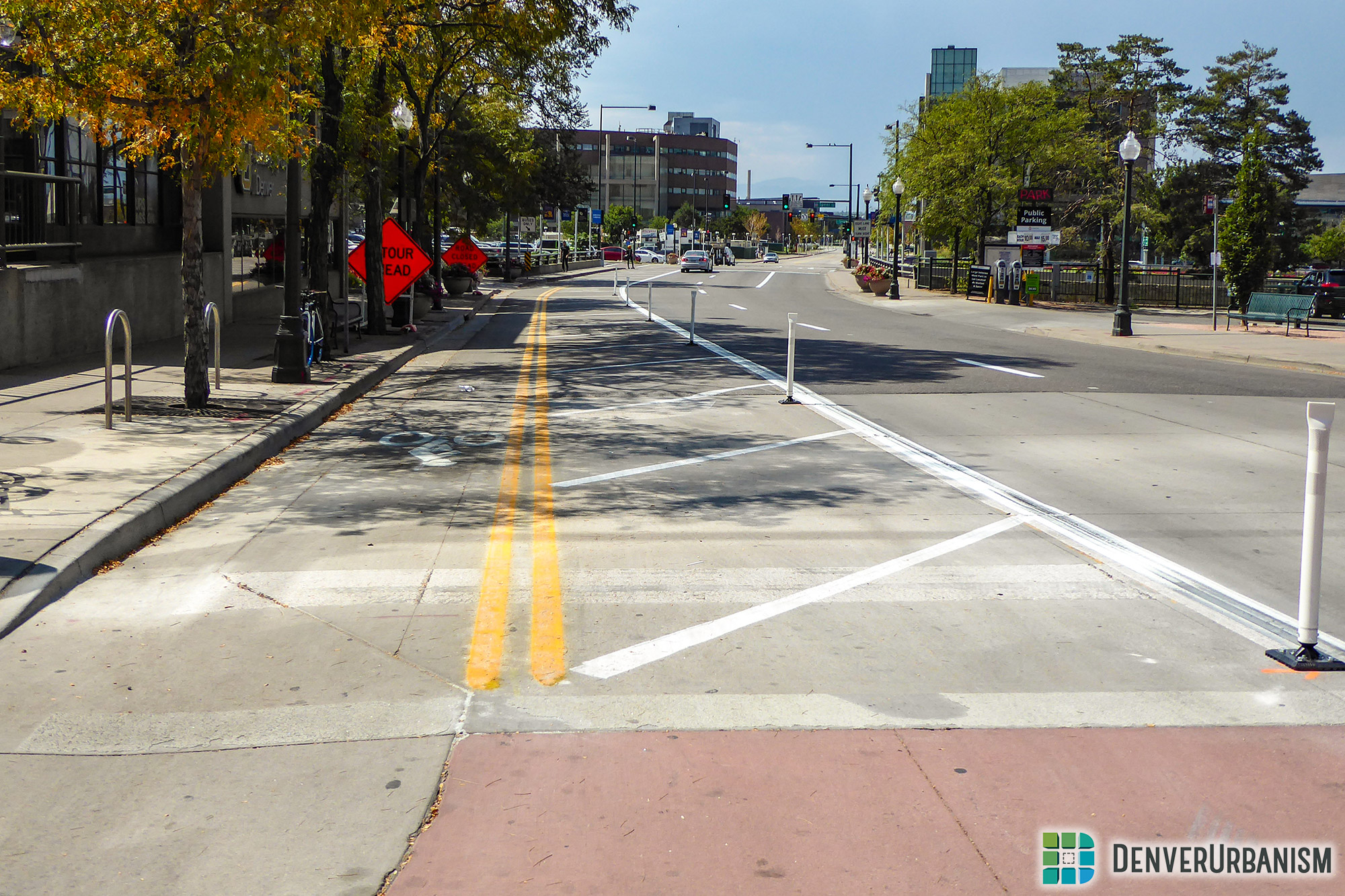
The project will be phased in. First, new painted bike lanes, signage, signals, etc., will be installed this year. Then in 2014, after additional design work has been completed, the bollards will go in.  Here’s a photo (courtesy BikeDenver) of Manager Cornejo at the recent meeting where he announced the Department’s commitment to the protected bike lane on 15th. 

Below is a diagram, courtesy Denver Public Works, showing the proposed design for part of 15th Street. This was released a few weeks ago prior to the announcement of the upgrade to a protected bike lane, so some design change may be in store. Anyway, this gives you a general idea of the new bike lane coming to 15th Street.

Congratulations to Denver Public Works manager Cornejo and his staff for their willingness to continue to push Denver’s bicycle infrastructure forward!


15th Street Bicycle Facility Galvanizes Support for Cycle Track Design

In January, Denver Public Works unveiled the design for the long-awaited 15th Street dedicated bicycle facility, which has been in the works since 2010. 15th Street plays a pivotal role in Denver’s bicycle network for three reasons:

1. It’s the only Downtown street besides 20th Street that connects to the Highlands neighborhood, and the I-25 interchange on the 20th Street bridge makes 15th the preferred route for many cyclists entering Downtown from Highlands.

2. 15th Street plays a key connection role to the east where it connects to southeast bicycle routes via Bannock and northeast bicycle routes via the 16th Avenue bike lane.

3. Within the Downtown network, northwest bound 15th Street is the complement to southeast bound 14th Street, which already has a bike lane. 15th Street is a missing link.

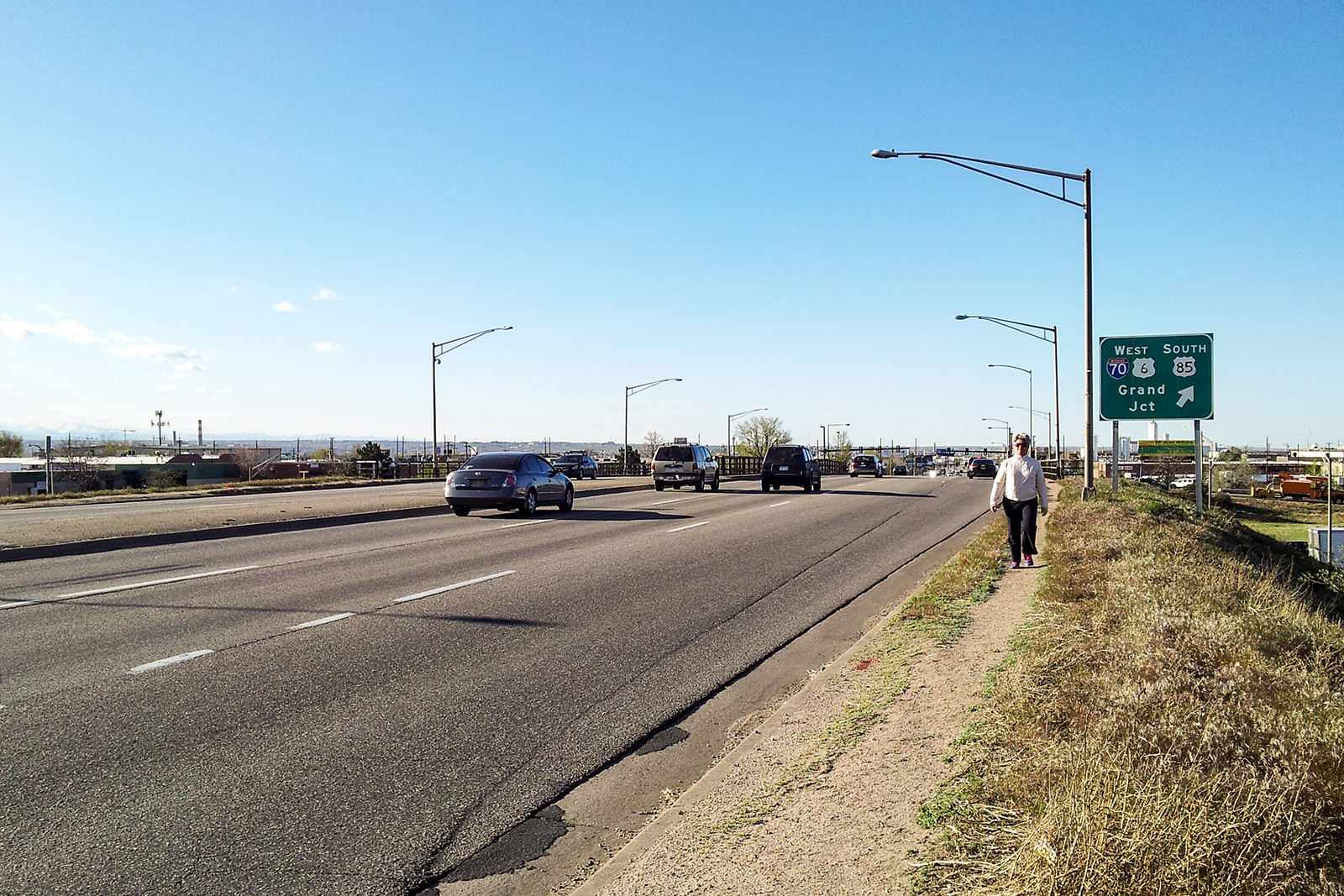
What all this means is that every day large numbers of people on bicycles use 15th Street to traverse in and out of Downtown Denver. In fact, 12% of the traffic on 15th street during peak hours is bicycle traffic (Denver Public Works). This is true even though 15th Street can feel pretty scary to even the most advanced cyclist, with hundreds of RTD buses and thousands of cars moving along the corridor; it’s astonishing that so many people still choose to ride on 15th Street. They do so because there really are no other good choices.  The fear of riding in traffic on 15th Street has pushed many people to bicycle on the sidewalks. According to Public Works, over 30% of people riding on 15th Street are choosing to ride on the sidewalk, which is illegal and dangerous for people walking and biking alike. But given the choice between riding in 15th Street traffic and taking their chances on the sidewalk, many people are choosing to ride on the sidewalks. Frankly, it’s hard to blame them.

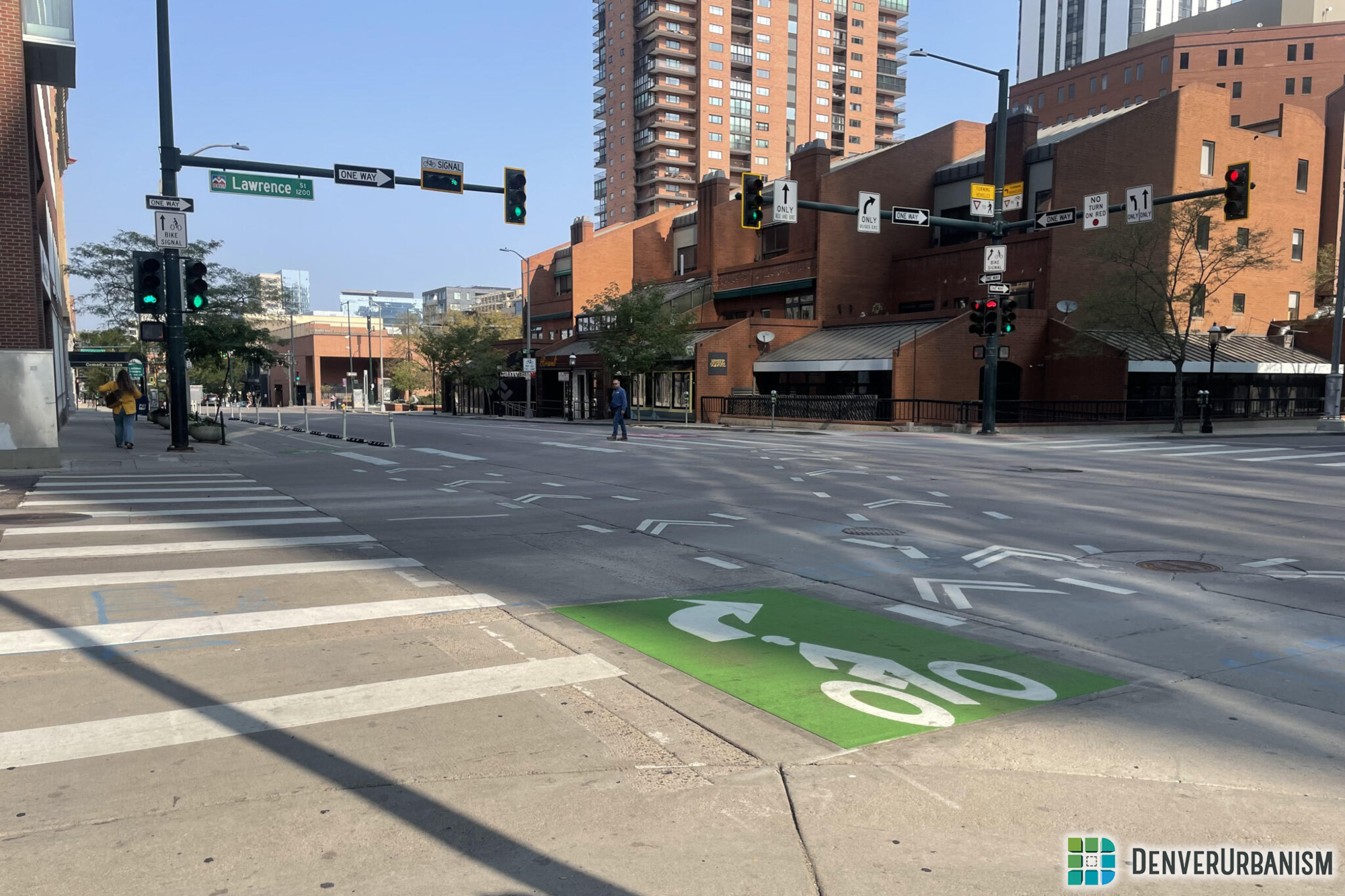
So it was with great anticipation and high expectations that those who have lobbied and worked hard to get the 15th Street bicycle facility for the past three years awaited the proposed design. When it was presented to various groups in January, there where some great elements including Denver’s first use of green paint to mark conflict zones, a Copenhagen-style bike box to make turning right from the left-side lane easy and safe, an innovative left-side design, a textured buffer material, and a queue jump signal to give bicyclists a head start at one key intersection. The city and Public Works should be applauded for these design elements. It’s well thought out and way ahead of anything we currently have in Denver.

However, these great design elements were over shadowed by the disappointment in one aspect of the design: There is no vertical separation between the general traffic lanes and the dedicated bicycle lanes.

This vertical separation is the design element that distinguishes a cycle track from a buffered bike lane, such as the facility already in use on Champa Street from 13th Street to 20th Street. Without vertical separation, you don’t have a cycle track: you have a buffered bike lane which is a distinctly less desirable of a facility from a safety standpoint. Cars can easily double park in a buffered bike lane and frequently do, forcing people on bikes to veer into traffic. The vertical separation is seen as key to making the 60% of the population who are interested in bicycling but concerned about safety feel secure enough to get on their bike and ride down 15th Street.

In Copenhagen, bike parking is used as the vertical separation element

The lack of separated bicycle lanes in Denver’s transportation network has become dismaying to local bicycle and business organizations, as other similarly size cities such as Seattle, Vancouver, Portland, and Minneapolis have embraced this facility type and seen great results. A 2012 study of vertically separated facilities in Toronto found a 50% decrease in accidents among all user groups on streets where the separated bicycle facilities were installed. Denver is falling behind when it comes to innovative bicycle facilities, and this is important for the economic health of the city as it tries to attract an educated, healthy, sustainability-minded workforce that increasingly demands a walkable, bikeable city.

The concern over 15th Street is growing into a groundswell of support for the inclusion of vertical separation or true cycle track design in the 15th Street facility. About two weeks ago, a grass roots group called Denver B Change started an online petition calling for vertical separation on 15th Street. As of today, over 600 people have signed the petition. We here at DenverUrbanism urge you to sign the Denver B Change petition.

At their February meeting, the Mayor’s Bicycle Advisory Committee voted to recommend that vertical separation be included in the 15th Street design, and BikeDenver has been meeting with officials and staff making it clear that they want to see the vertical separation included in the 15th Street design. Upcoming efforts will include a BikeDenver organized Valentines Day event in front of the City and County building where the public is being invited to sign a giant “We Love Protected Bike Lanes” card to the Mayor. We hope you will plan to attend this event!

These efforts are important and not surprising considering the healthy, vibrant culture of Denver. I believe that our city leadership understands the benefits of a healthy sustainable city and I trust that they will make their best effort to see vertical separation added to the 15th Street bicycle facility. To quote Piep van Heuven, Executive Director of BikeDenver, “If not now, then when? If not here, then where?”

15th Street is the right place and now is the right time to install Denver’s first substantial vertically separated bike lane, Denver’s first substantial cycle track.

DenverUrbanism encourages you to contact your City Council representative to urge them to lend their influence in supporting a vertically separated bike lane on 15th Street!

Note: we will be updating this post soon with exhibits that illustrate the proposed 15th Street bicycle facility design.